
Learn why not every borrower with a gambling footprint is high-risk, and how digital data separates harmless behavior from risk patterns.
Would you decline a loan because someone has a gambling account?
At first glance, that may feel like the safer decision. But a single digital signal can hide very different actions and levels of risk.
That is the real challenge with alternative data: knowing what deserves weight and what needs more context.
Using gambling as a case study, this article explores how digital footprints can help risk teams move from isolated red flags to a much richer view of the applicant.
In digital credit scoring, a gambling signal means an applicant is registered with an online casino, sportsbook, betting website, or related app.
An account shows that a relationship with the service exists. It says much less about the behaviour behind it.
Someone may keep an old casino account they started when they were much younger. Another person may bet on a favorite football team during a championship. And then there are people who use several casino and betting platforms regularly.
All three can produce a gambling-related signal.
Yet grouping them together is like saying a Formula 1 driver and someone who just got their license are both drivers.
Let’s use Mexico as an example.
According to ENCODAT 2025, roughly 4.3% of people aged 12 to 65 had participated in some form of gambling or betting during the previous year. That’s almost 4 million people.
Within that group, only 6.3% showed signs of problem gambling. This refers to patterns such as:
In more serious cases, gambling may begin to affect a person’s finances, relationships, work, or overall wellbeing.
Those figures describe a very clear thing: simply having a betting account or placing an occasional bet does not fall into the same category.
The online market is broad as well. Gambling and betting are not the same thing. The second one is closely tied to sports, which sets it apart from things like slots, roulette, and poker.

Sports betting accounts for roughly half of online gambling revenue in Mexico, with football driving much of that activity.
So a gambling-related registration in Mexico is an umbrella for very different cultures and habits – from seasonal football betting taking place a few times a year to occasional casino entertainment, with and without consequences.
And even setting Mexico aside, there are many markets where gambling or betting is a normal part of everyday leisure.
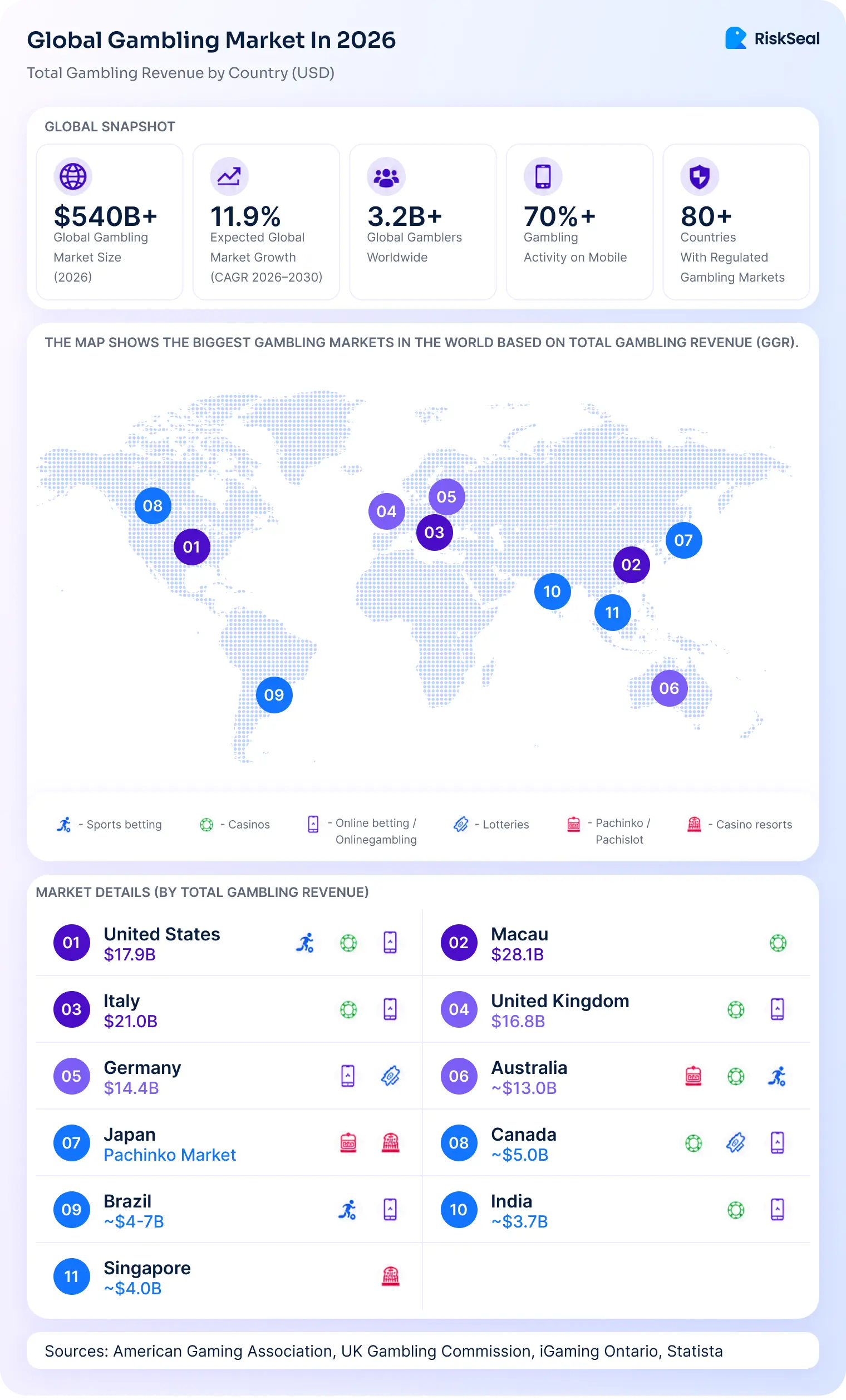
In the United Kingdom and Australia, sports betting is deeply embedded in mainstream sports culture.
In much of Western Europe, betting shops, online platforms, and gambling advertising are common and regulated.
In the United States, sports betting has expanded rapidly since legalization spread across many states.
Canada also has a large legal gambling market, while places such as Macau and parts of the Philippines have highly visible casino industries.
On the contrary, countries such as Indonesia, Saudi Arabia, and Iran heavily restrict or prohibit gambling. Mainland China bans most forms outside limited exceptions.
Public attitudes reflect those differences.
In Pew's 2025 cross-country survey, only 29% of Americans described gambling as morally wrong. In Indonesia, the figure reached 89%, and in India it reached 83%.
The same digital signal can therefore carry different social meanings depending on the market.
In my experience, this is where risk teams need to be especially careful with broad categories.
They already work under strict rules and strong pressure to avoid costly mistakes. A simple exclusion rule can look safe because it removes ambiguity.
But it also assumes that every gambling-related registration represents the same level of concern.
Gambling addiction can clearly contribute to debt, missed payments, repeated borrowing, and unstable finances. Occasional gambling or betting does not describe any similar tendencies.
A model that denies every applicant with a gambling-related account risks turning a broad lifestyle signal into a discrimination point.
So the question is no longer whether the signal exists, but what the rest of the applicant’s digital footprint tells us.
A gambling registration gives a risk team one observation. The job of alternative data risk infrastructure is to connect it with hundreds of other puzzle pieces and build a 360-degree applicant portrait.
On its own, it cannot distinguish an ordinary lifestyle choice from a broader pattern of instability, impulsive financial behavior, or weak self-control.
Here is what a digital footprint can reveal about a potential borrower in 2026.
A digital footprint can show whether someone appears able to sustain regular spending and manage money across different services.
In a gambling-related context, the question is whether those broader money habits still point to stability and everyday financial priorities.
Paid subscriptions and premium services are one clue. Netflix Premium, Sports World, Adobe Creative Cloud, Microsoft 365, Uber One, and Rappi Pro all point to recurring non-essential expenses.
Long-running shopping accounts broaden the view. A five-year-old active Mercado Libre profile with repeated order activity suggests a more established spending pattern than a newly created account.
Financial apps reveal another side.
Banking apps, neobanks, e-wallets, P2P services, BNPL platforms, budgeting tools, and investment apps can show that someone actively manages money across several channels.
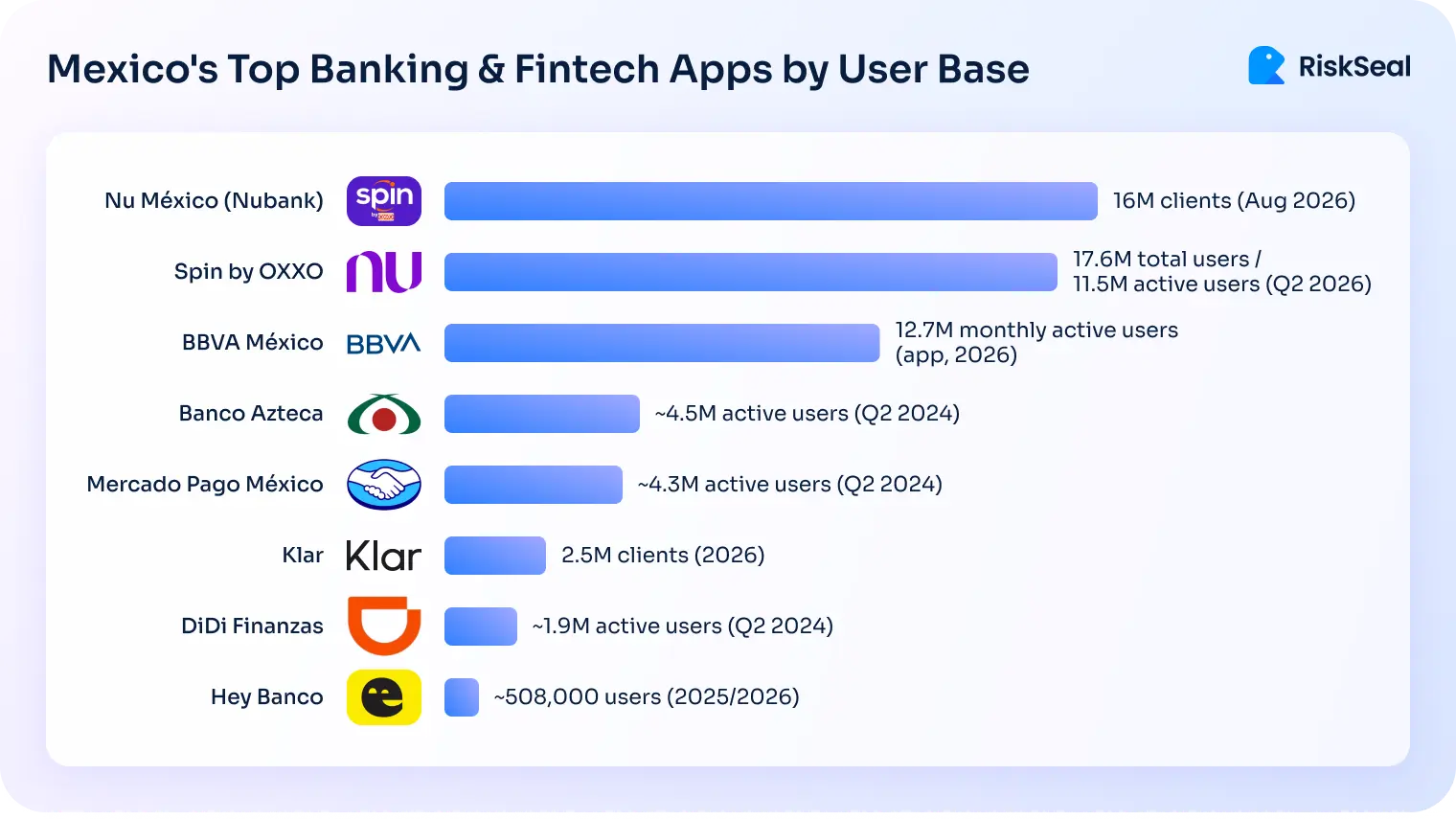
The analysis does not need to reconstruct individual transactions or purchases. Account presence, tenure, and the fact of usage itself already provide useful context.
This can be especially valuable for freelancers, gig workers, seasonal workers, and students with side income.
Their earning patterns may not fit a traditional long-term employment model, but their digital footprint can still show regular economic activity.
Seller accounts, invoicing tools, paid domains, professional email, SaaS products, and cloud services can further support evidence of active work, business activity, and financial discipline.
Digital activity does not only leave traces across apps and online services. The devices used during an application can add another layer of context.
In the assessment built around gambling signals, it can help show whether the activity fits a stable digital routine.
Basic device intelligence can identify hardware brand, model, and operating system. More advanced fingerprinting may analyze typing, scrolling, mouse movements, or touch gestures.
These methods remain less common, but fraud tactics keep evolving. And so should tools that lenders use to fight back.
Device switching can be especially informative.
Using a smartphone, laptop, work computer, or tablet can be perfectly normal. Rapidly moving across many devices during one credit journey deserves more attention.
One device might create the account, another submit the application, and a third monitor approval. A fourth may then appear around drawdown.
That pattern can suggest account takeover, credential abuse, or attempts to bypass controls.
Shared household devices, work hardware, or privacy habits can explain legitimate switching. Stable identities, familiar locations, and long-running accounts can reduce concern.
A sudden sequence of five or more devices combined with other anomalies tells a different story.
For digital lenders, tech literacy also supports smoother onboarding, servicing, payments, and account recovery.
A digital footprint can also show how someone lives day to day.
Fitness, travel, education, gaming, entertainment, delivery, and community services all add context to an applicant’s profile.
Global platforms are always in the focus. Instagram, Amazon, Netflix, and similar services can show digital maturity and recurring engagement.
But local platforms often tell us much more about how naturally someone fits into a specific market. In Mexico, examples include:
The value comes from the combination.
A person who uses local transport, delivery, retail, entertainment, and payment services leaves a footprint that reflects everyday participation in that market.
Shared household services, professional networks, alumni platforms, and community apps can add another layer of social continuity.
These signals should never reward or penalize someone for their lifestyle choices.
A lender should not prefer one applicant because they visit cinemas, use fitness apps, or shop on a certain marketplace.
The purpose is to understand the applicant as a person within their local digital environment.
That broader angle helps risk teams distinguish a mature, coherent footprint from one that looks sparse, disconnected, or difficult to verify.
Digital identities usually develop patterns over time.
Long-running accounts, recurring engagement, familiar devices, and low account churn can all suggest continuity. A cluster of newly created profiles gives much less historical evidence.
One person may use a legal name on LinkedIn, initials elsewhere, and a nickname on another service. Matching systems can compare spelling, transliteration, alphabets, and language-specific name variants.
This is useful in markets where people move between Latin, Cyrillic, Arabic, or other scripts.
Profile pictures can provide further corroboration where their use is permitted.
Several established accounts showing natural photos of the same person can increase identity confidence. Blank profiles usually add uncertainty rather than risk by themselves.
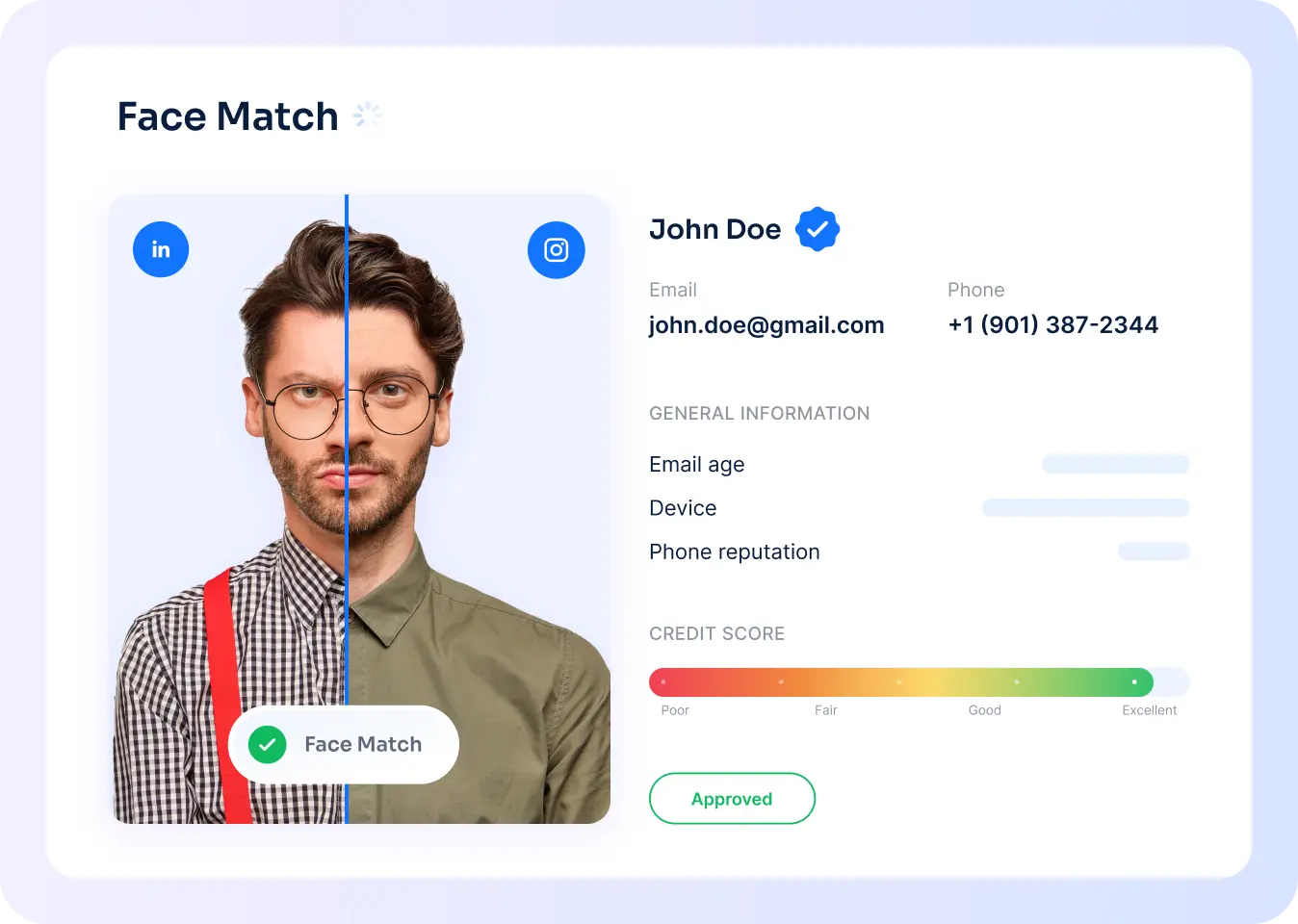
Random avatars, stock photos, celebrities, or frequently changing images can make identity resolution harder.
Context decides how much weight those signals deserve.
A long-running account with a cartoon avatar, stable contact details, familiar devices, and consistent names can still look credible. Several new accounts with unrelated names, changing images, and unfamiliar devices create a weaker identity pattern.
Visual signals also require clear limits.
Privacy preferences, culture, personal safety, and professional habits all affect profile-photo use. Facial consistency should support identity checks, never become a requirement for creditworthiness.
Fraudulent identities can look polished too. Maintaining one coherent persona across years, platforms, languages, devices, and accounts is simply harder to fake consistently.
This is where gambling and betting return to the picture.
Trading platforms, speculative investment services, gambling apps, short-term credit products, and rapid growth in new finance accounts can all contribute to the bigger picture.
The important word here is concentration.
One gambling account says very little. One trading account also says very little.
A dense cluster of recent speculative services deserves more attention, especially when other signals point in the same direction.
The same principle applies throughout alternative-data scoring. Risk comes from patterns gaining weight together.
Across all these dimensions, the same principle keeps returning.
Account presence tells us one part. Tenure, recency, consistency, and combinations tell us the rest. Risk discussions become much more useful once teams move beyond isolated red flags.
A digital footprint can now provide an unusually rich portrait of an applicant's economic and behavioral life.
That portrait still needs boundaries.
Digital scoring should rely on permissioned, privacy-conscious, explainable signals. It should avoid rebuilding private transaction histories or turning everyday digital life into surveillance.
Fairness matters just as much. The goal is to reduce uncertainty without creating new forms of bias.
That brings us back to gambling.
A gambling or betting account may deserve attention. So may hundreds of other signals.
No single one should carry the weight of an applicant's entire credit decision. The real value comes from seeing how the pieces fit together.
Credit risk teams will keep getting access to more data. Alternative data providers are here to show them what deserves weight.
A gambling registration is a good example because it exposes the weakness of binary thinking. The same principle applies to literally every other part of a digital footprint.
Each signal can add information. None should be asked to explain the applicant alone.
In my experience, the strongest risk models treat alternative data as a system of relationships. They look for continuity, concentration, consistency, and contradictions across the whole profile.
That approach also creates a better standard for model governance.
A risk team should be able to explain why several signals changed a decision. “This person has a casino account” is a weak explanation.
A broader pattern of recent speculative activity, identity inconsistencies, unusual devices, and limited digital history gives reviewers much more to work with.
This is the principle behind RiskSeal’s proprietary credit risk assessment API.
It was built specifically for risk teams to turn a large digital footprint into structured, applicant-level risk intelligence.
The API connects signals across identity, behavior, devices, services, and local digital ecosystems instead of forcing lenders to interpret hundreds of observations one by one.
That infrastructure supports professional judgment, rather than replacing it.
Risk teams still set their own policies, thresholds, and risk appetite. Alternative data gives them a richer evidence base for those decisions.
The future of alternative credit scoring is not finding the strongest red flag. It is understanding the person around it.
RiskSeal will join FINNOSUMMIT 2026 as a sponsor on September 23-24 at Expo Santa Fe in Mexico City.
At the event, we will analyze borrower behavior patterns using signals from local Mexican services as an example.
We will show how alternative data can do more than fill gaps left by traditional bureau reports. It can add a deeper layer of context around an applicant’s financial habits, digital identity, and everyday behavior.
The goal is to answer the question at the center of this article in real underwriting practice:
Should you lend money to a gambler?
If you are planning to attend FINNOSUMMIT, you can also get 30% off your ticket through RiskSeal. Reach out to our team on the event page for the discount details and meet us in Mexico City.
.svg)
Join our team at FINNOSUMMIT 2026

Discover the power of alternative data in credit scoring to enhance financial inclusion.

.webp)
Discover how alternative credit scoring helps BNPL providers mitigate risk and enhance accessibility.
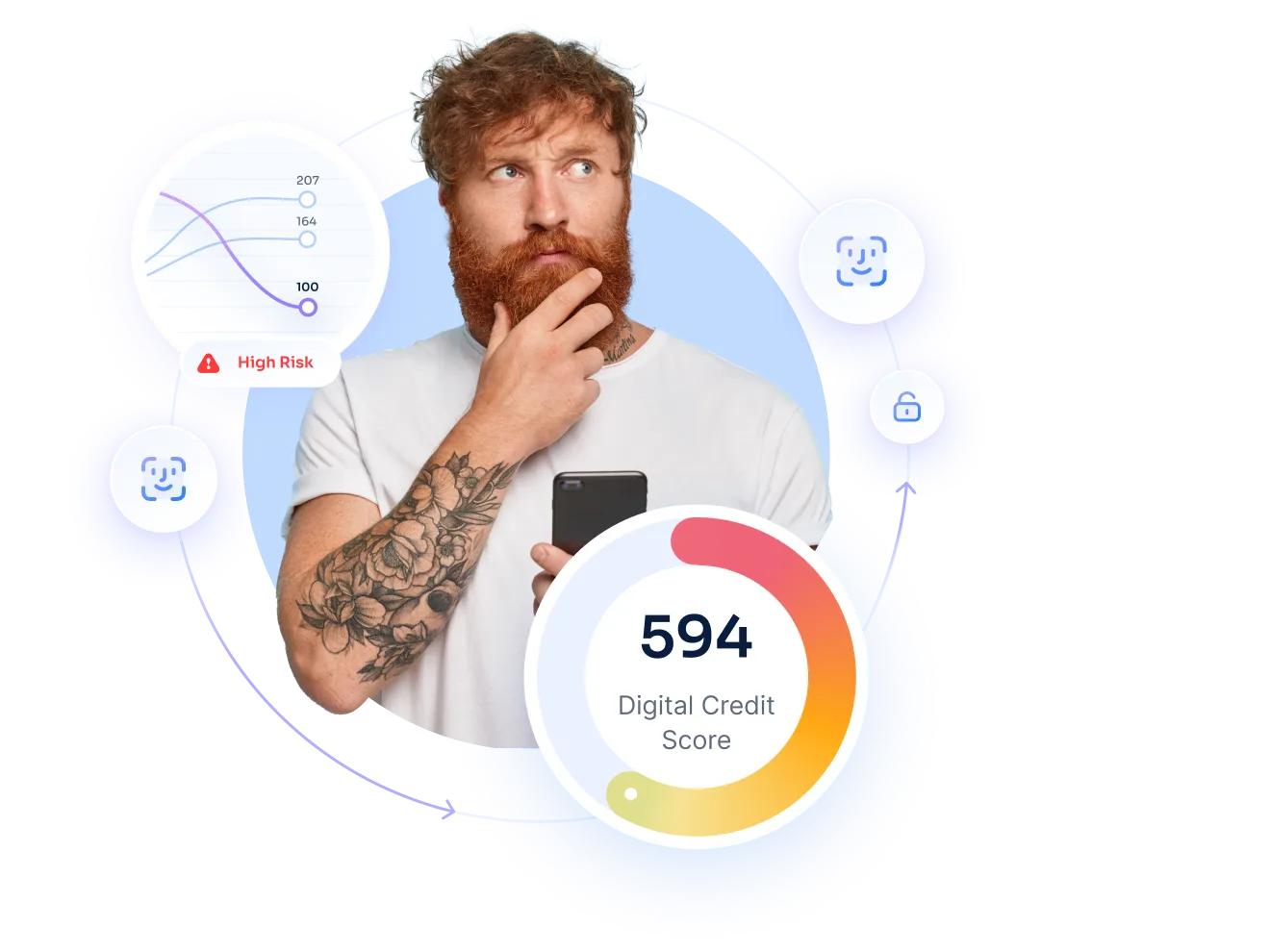
Learn how modern customer risk assessment leverages AI and alternative data to fight fraud, boost compliance, and speed up smart approvals.