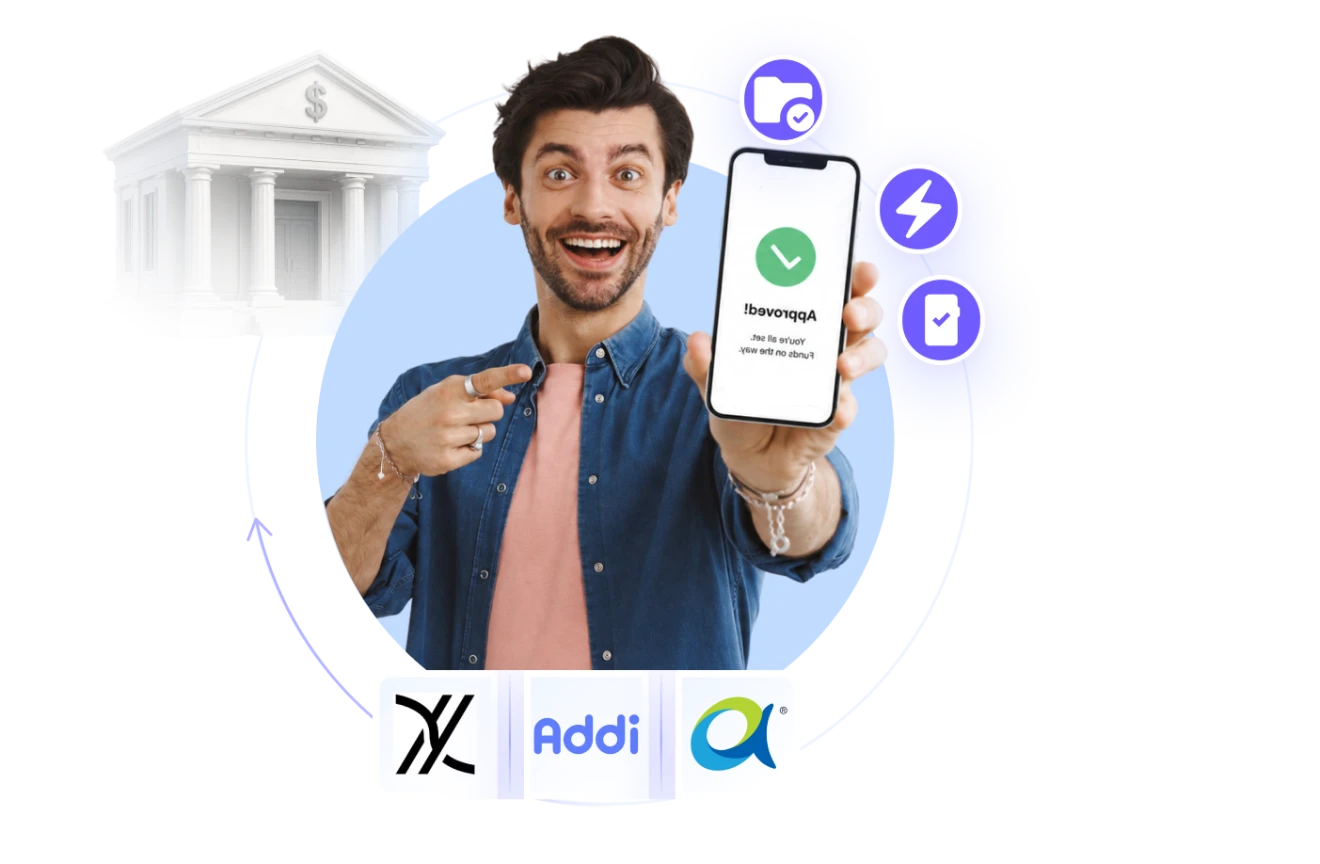
Digital Credit Scoring Software for Emerging Markets
API-based solution for real-time credit scoring powered by digital footprint analysis. Used by lenders across LATAM, Asia, Africa, and beyond to reduce risk, expand lending, and approve more reliable borrowers.
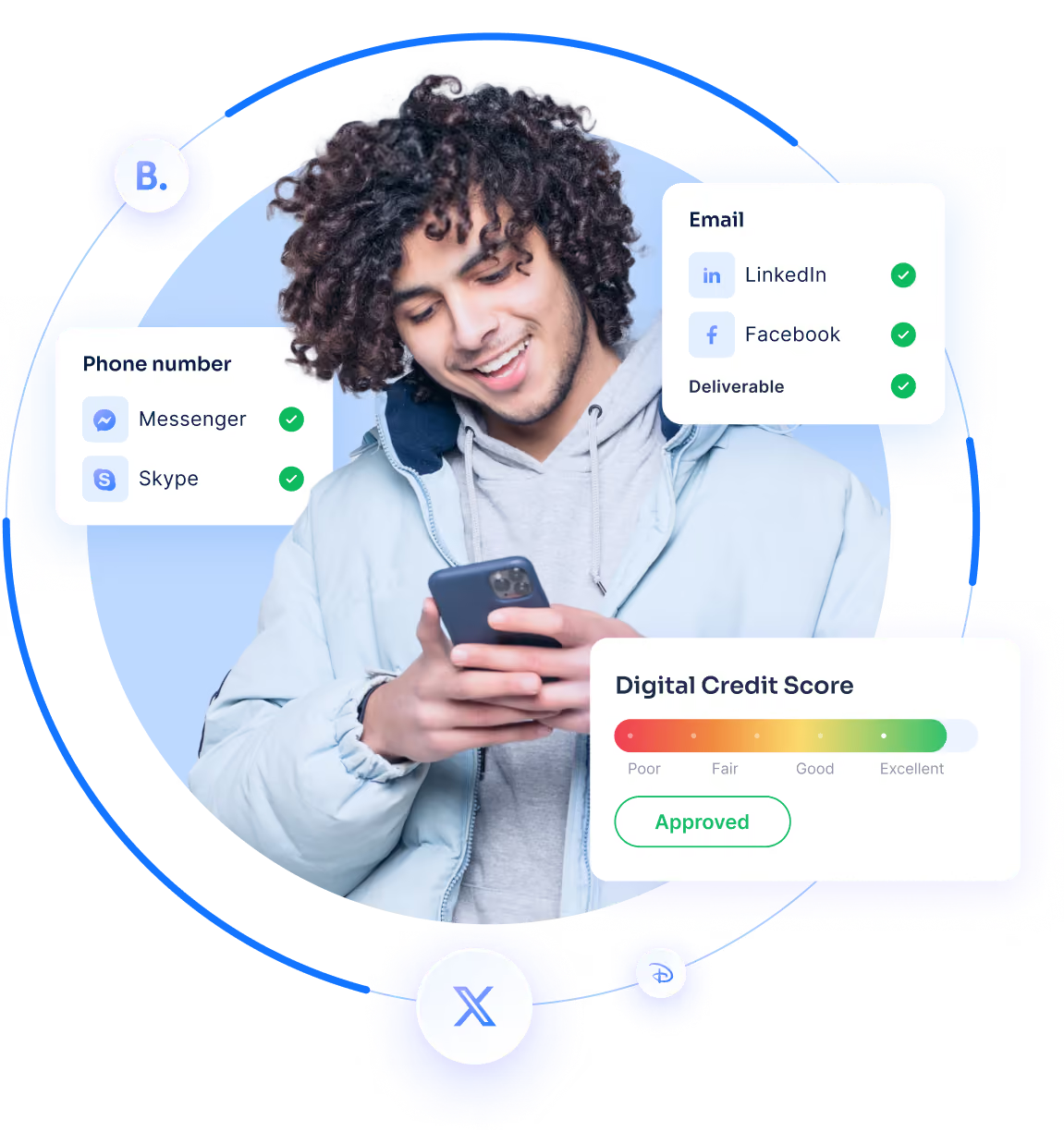
Key benefits of credit scoring software powered by alternative data

Spot creditworthy applicants
Identify solvent customers relying on 450+ real-time signals we deliver.

Detect potential defaulters early
Find suspicious signs that traditional digital credit solutions often miss and flag future defaulters.

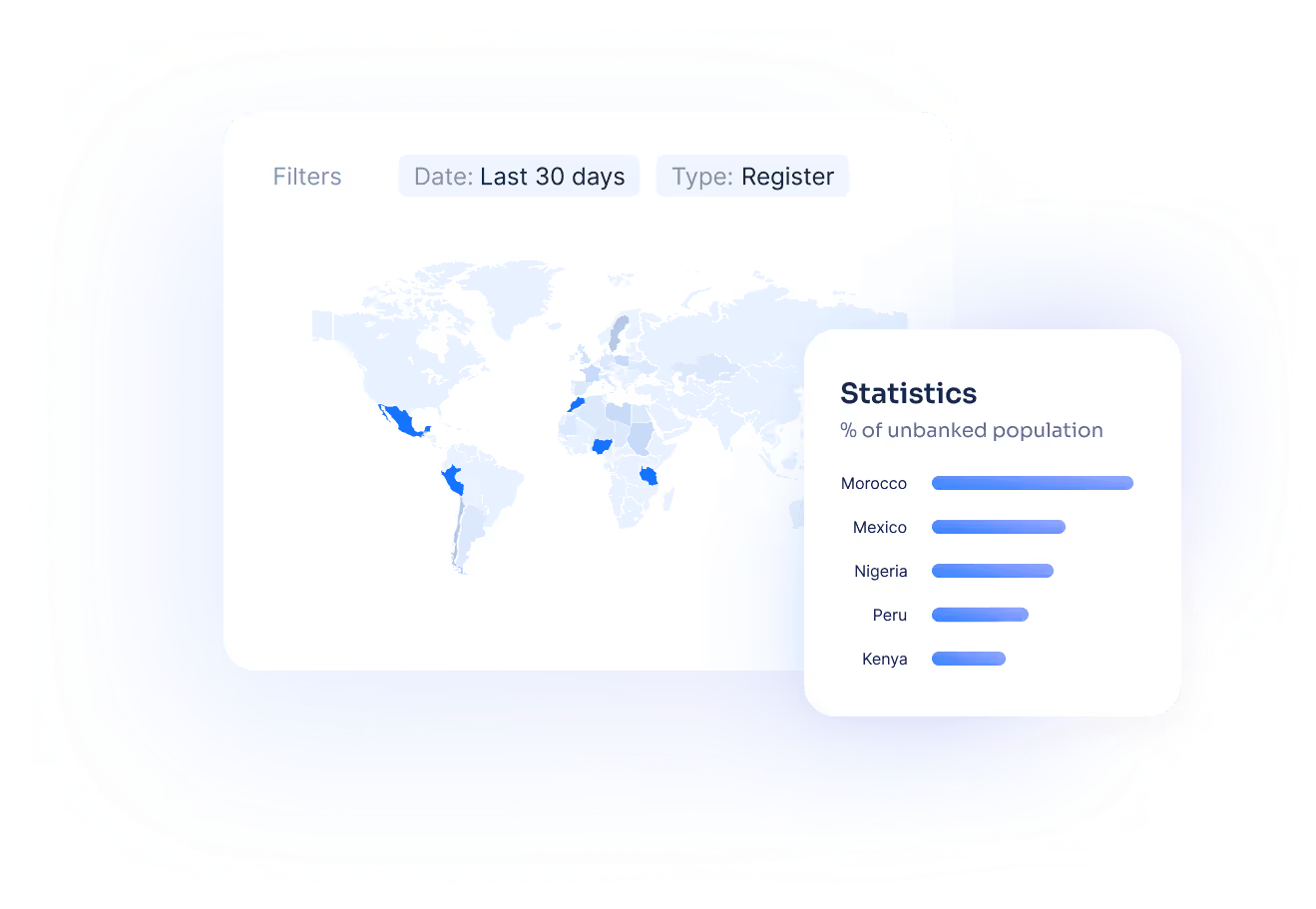
Reach unbanked customers
Let RiskSeal be the bridge between your company and underserved populations.

Lend with confidence in emerging markets. Even when traditional data is limited.
AI-powered credit scoring software in real time
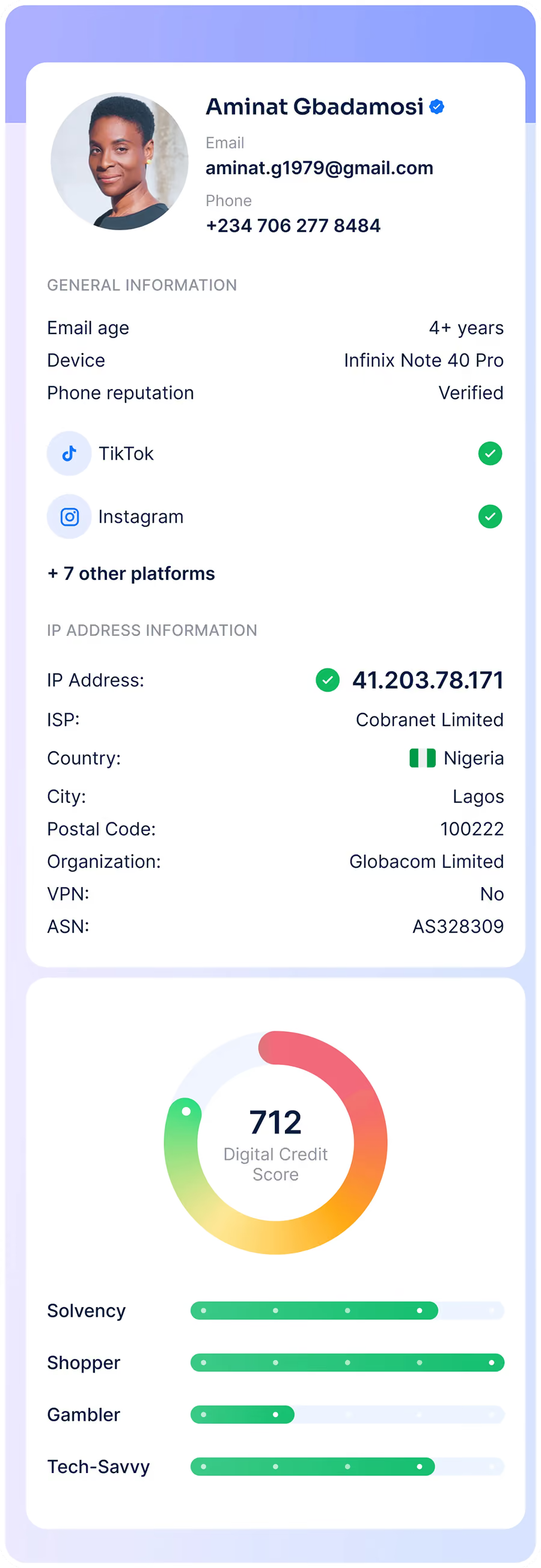

Our Digital Credit Scoring solution analyzes the borrower’s email, phone number, IP address, full name, location, and photo, then evaluates their digital footprint from over 200 online platforms.
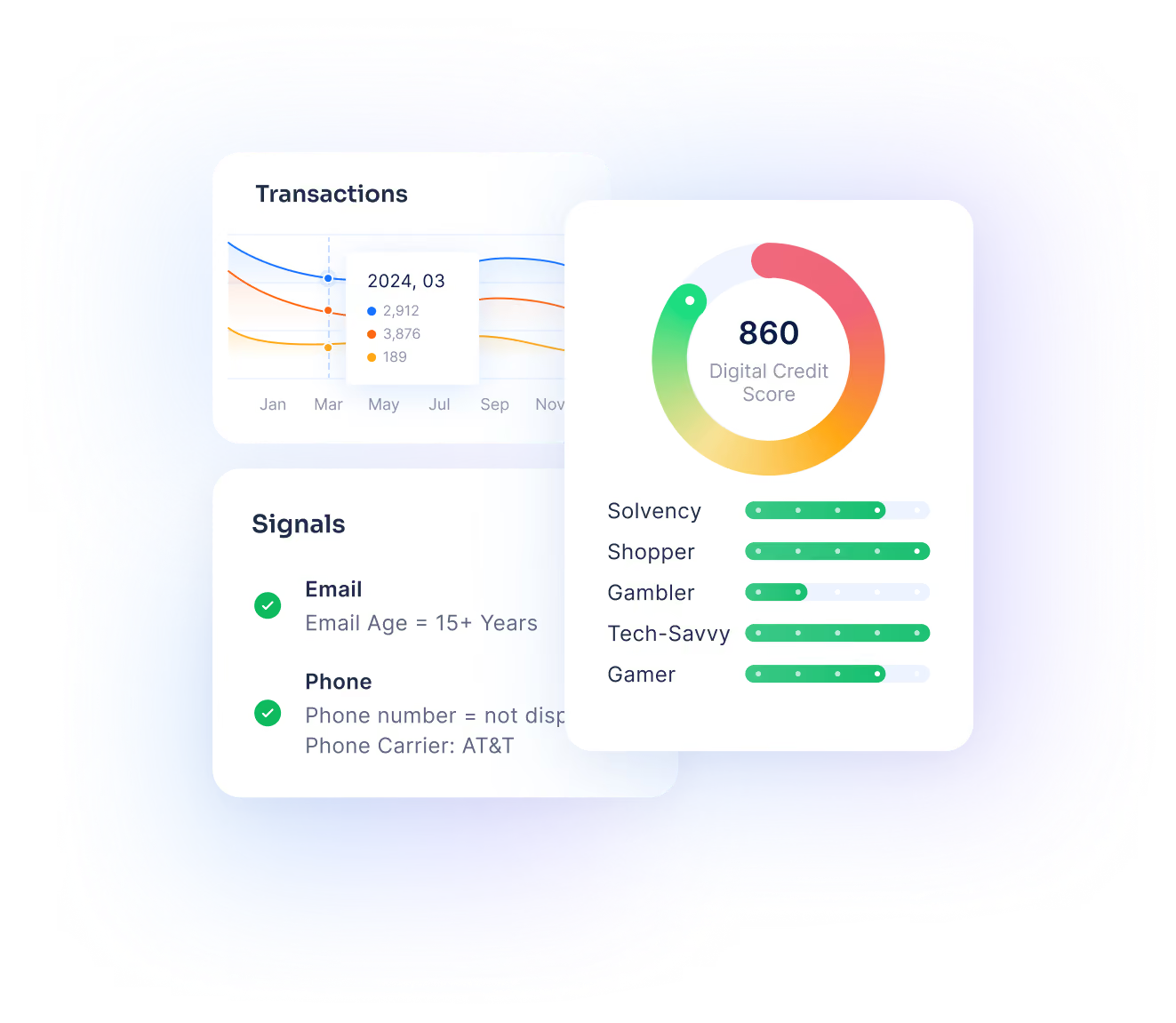
With just a single API call, RiskSeal provides lenders with 450+ customer insights, a detailed client profile, and a ready-to-use digital credit score.

Digital identity verification
The real-time authentication of a borrower's identity using online verification methods.

Detailed consumer profile
A 360-degree view of consumer digital footprints, spotlighting lifestyle habits for detailed understanding.

Alternative data points
450+ data points in a digital scoring system to enrich models and cut approval time to seconds.

Region-specific signals
Local online services and market-specific insights enhance borrowers’ evaluation.
Why lenders choose RiskSeal
for credit risk assessment
Approved customer base growth
Identification of trustworthy customers from high-risk ones, even with low or no credit rating.


Proactive default prevention
Stop defaulting loans before they happen and avoid the cost of debt collection, or loss from no repayment.
Credit risk reduction
Real-time, accurate, and extensive data to spot default risk, even in underbanked areas or without access to a credit bureau.

Market expansion
Enter new markets by using a credit scoring tool to reach unbanked and underbanked populations.
Lower cost of risk
Leverage the predictive capability of AI and ML to improve digital scorecards, decreasing the cost of risk.
Great UX
Shorten the credit decision time from days to seconds with 450+ customer insights delivered in real time.
.avif)
Industries we empower with real-time credit scoring

Online lending
RiskSeal helps online lenders go beyond traditional checks by using 450+ alternative data signals. Our credit risk rating software enables faster approvals, sharper risk assessment, and higher accuracy in spotting reliable borrowers.


BNPL
Our credit scoring software solution supports BNPL providers with real-time signals to assess creditworthiness and detect synthetic identities. This results in lower delinquency rates and stronger repayment.

Neobanks
RiskSeal’s digital credit scoring solution allows neobanks to evaluate applicants in seconds, flagging high-risk cases early and cutting onboarding costs. This way, more good customers can be approved without friction.

Banks
For traditional banks, RiskSeal enriches credit bureau reports with alternative data. By analyzing digital footprints, our credit scoring software reduces false approvals and increases portfolio resilience.
Client success stories
See how RiskSeal’s unique data sources generate pure Gini uplift, even in emerging markets. Real numbers. Real before/after performance.
.webp)





FAQ
How is RiskSeal different from traditional credit bureaus?

Traditional bureaus and the RiskSeal credit scoring system play complementary roles in credit risk assessment.
Traditional bureaus:
-Rely on historical repayment data (loans, credit cards, utilities).
-Struggle with thin-file and no-file applicants.
-Update slowly and miss real-time behavioral signals.
RiskSeal:
-Analyzes real-time digital footprint and behavioral data.
-Works effectively for thin-file, no-file, and informal workers.
-Captures current stability patterns, even without formal credit history.
Bureaus answer: How was debt managed in the past?
RiskSeal answers: Does the applicant show stability right now?
Our credit scoring software solutions lift predictive accuracy from 0.67-0.69 standalone to 0.73 combined.
How accurate is RiskSeal's Digital Credit Score compared to traditional credit bureau scores?
Independent testing on 6+ million applications shows strong, stable predictive accuracy. Our credit score software achieved an AUC of 0.67 using digital data alone, effectively separating higher- and lower-risk borrowers without bureau data.
When combined with traditional bureau scores, performance improves significantly:
-Digital-only model: AUC 0.67
-Bureau-only model: AUC 0.69
-Combined model: AUC 0.73
This uplift proves digital and behavioral data add context that traditional sources miss.
Bureaus often struggle with thin-file or no-file applicants due to limited repayment history. RiskSeal analyzes stability signals that exist without formal credit records, delivering stronger model discrimination, higher approvals in underserved segments, and lower portfolio default rates.
Is RiskSeal digital credit solution compliant with privacy regulations?
Yes. RiskSeal is built on privacy-first principles and holds ISO 27001 certification for information security.
We are fully compliant with:
-GDPR (European Union)
-Mexico's LFPDPPP (Federal Law on Protection of Personal Data)
-CCPA (California Consumer Privacy Act)
-Regional data protection laws (across Latin America, Asia, Middle East, and Africa)
All data is collected with user consent, processed lawfully, and stored securely with encryption at rest and in transit.
We do not sell or share personal data with third parties outside the scope of credit assessment.
Privacy and compliance are not add-ons; they are core to how our credit scoring platform operates.
This ensures that as you expand into new markets or face evolving regulations, RiskSeal remains a trusted and compliant partner.
Can RiskSeal integrate with existing loan origination or credit decisioning systems?
Yes. RiskSeal is designed as an API-based digital lending platform that works smoothly with your existing decisioning infrastructure.
It integrates via RESTful API with minimal development effort and can be added as an enrichment module to your current workflow.
You don't need to replace your existing credit scoring system – RiskSeal layers on top of it.
Implementation timeline:
-Initial API integration: 1 to 5 business days for technical connection and testing
-Full production deployment: 2 to 4 weeks, depending on internal testing, compliance, and workflow configuration
Our technical team supports you throughout the entire process to ensure integration is simple, fast, and aligned with your operational requirements.
Whether you're using Salesforce, custom-built systems, or specialized lending platforms, RiskSeal fits into your stack as a flexible credit scoring tool without disrupting your existing processes.
What if an applicant doesn't use social media?
Social media is not required to receive a RiskSeal score.
While it’s one signal category, RiskSeal analyzes 450+ signals across email, phone, IP/device data, e-commerce activity, paid subscriptions, web services, and social platforms.
Applicants can score strongly without social accounts. Stability signals may include:
-A years-old email with consistent usage
-A long-term mobile number
-Active subscriptions (Netflix, Spotify, etc.)
-Regular e-commerce activity
-Stable devices and IP addresses
These patterns reflect consistency and genuine digital engagement – often more predictive of repayment than social activity.
RiskSeal’s model evaluates overall signal coherence, not any single platform, ensuring fairness and making our credit scoring solution effective for both highly active and minimally visible digital users.
Won't analyzing digital footprints violate privacy laws?
No. RiskSeal’s credit scoring platform is built to comply with GDPR and regional data protection laws across LATAM, Europe, Asia, the Middle East, and Africa.
We ensure compliance through:
-Explicit consent. Obtained during the loan application process before any analysis begins.
-Public data only. No access to private messages or protected content.
-Legitimate interest. Credit risk assessment and fraud prevention are recognized legal bases.
-Data minimization. Only signals relevant to lending decisions are collected.
-Right to explanation. Applicants can request information about how their data was used.
-Secure processing. Encrypted data, ISO 27001-certified infrastructure, no third-party sales.
Digital credit scoring is a compliant, standard practice that improves inclusion while protecting privacy through transparency and proportional use of data.