
Build a clearer understanding of credit builder loans – how they work, who they help, and how lenders can score first-time borrowers safely.

Credit builder loans now sit at the center of financial inclusion efforts.
The U.S. market has grown to about $845 million with over 3 million active accounts, serving borrowers who traditionally fall outside prime credit tiers.
Rising demand from thin-file consumers, gig workers, and first-time applicants has pushed lenders to offer more accessible credit-building products.
This growth creates both opportunity and responsibility.
A credit builder loan is a small, secured installment loan designed to help borrowers build positive credit history.
The purpose isn’t immediate access to cash. It’s to create a reliable pattern of on-time payments that credit bureaus can record.
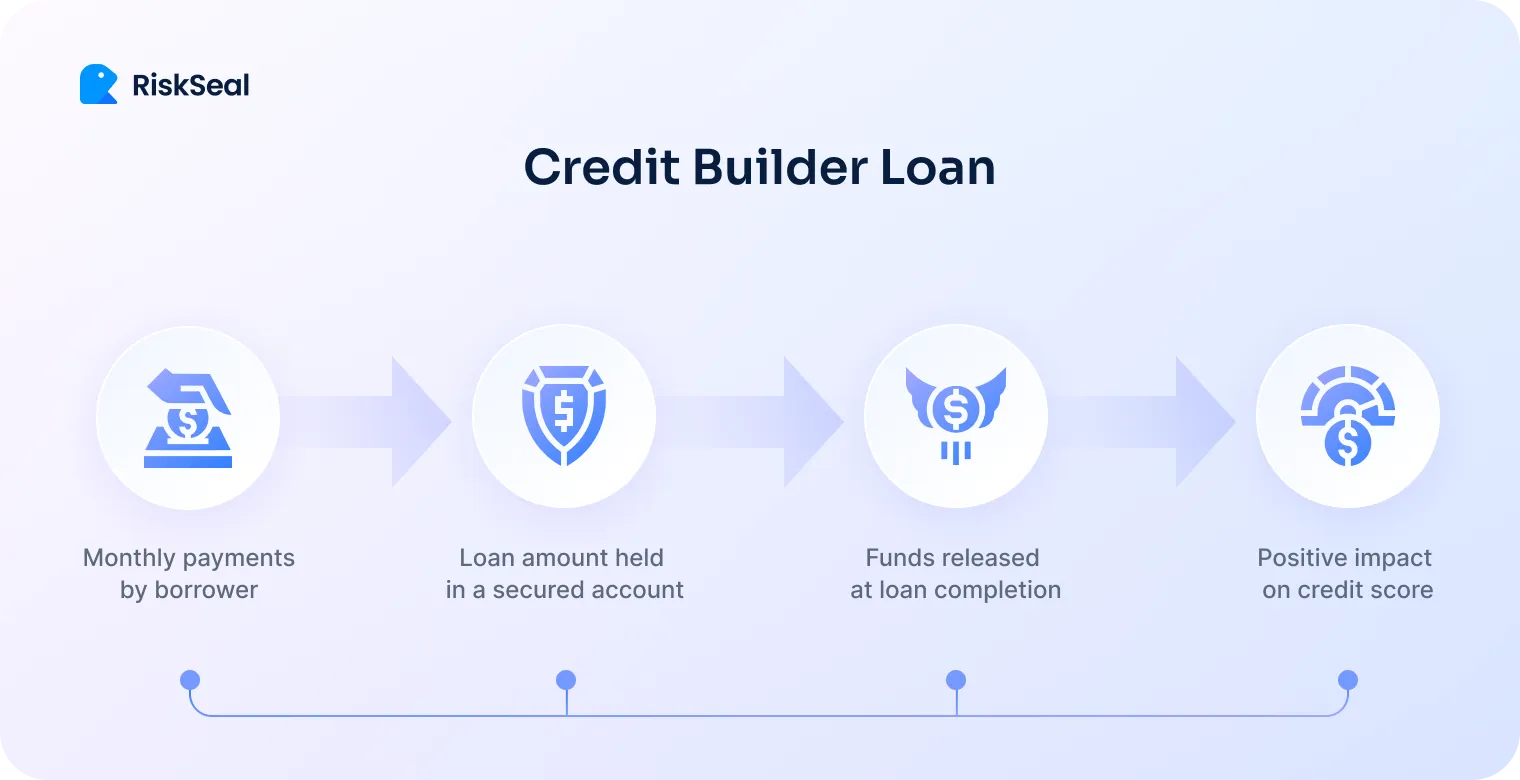
The funds are placed in a locked account while the borrower makes monthly payments toward the balance.
Once the loan is fully repaid, the borrower receives the accumulated funds, often functioning as both a credit-building tool and a forced savings mechanism.
This structure makes credit builder loans accessible to people who may not qualify for traditional credit products but still need a way to demonstrate repayment behavior.
The mechanics are simple, but the impact can be significant.
A borrower applies, gets approved, and the loan amount is deposited into a secured account. Instead of receiving the money upfront, they repay the loan over time in small installments.
Each payment is reported to credit bureaus, helping the borrower build a track record of responsible behavior.
The lender releases the funds only after full repayment, which reduces credit risk and creates a predictable cash flow cycle.
The model rewards consistency. On-time payments strengthen a borrower’s credit file, while missed payments can have the opposite effect.
Credit builder loans help borrowers strengthen their financial identity in a structured, low-risk way.
They support credit formation early in life, rebuild histories after financial setbacks, and introduce healthier repayment habits.
Lenders also benefit from the model. The loan is secured, so exposure is low. It supports financial inclusion goals and builds trust with borrowers who may later qualify for higher-value products.
A typical path might look like this: a borrower with little or no credit repays a 12-month builder loan, establishes a positive payment record, and then becomes eligible for broader financial products.
Traditional loans remain the backbone of consumer lending, but many borrowers need a way to prove themselves before they can qualify for one.
Credit builder loans fill that gap by creating a low-risk pathway into the credit system.
The difference is simple: one tests creditworthiness after approval, while the other helps establish it first. Credit builder loans can look risky, especially with thin-file applicants.
Digital credit scoring strengthens these decisions, allowing lenders to expand access without weakening performance or margins.
A credit builder loan is not a quick fix, and borrowers must understand the responsibility involved.
Interest and fees may apply, and missed payments can harm the credit profile that the product was meant to improve.
Availability also varies by institution. Borrowers need a predictable income stream to keep payments consistent, and lenders must ensure the product is marketed responsibly.
The tool works best when both sides treat it as a long-term investment in financial health.
Credit builder loans play an important role in expanding fair credit access, especially for credit-invisible consumers who lack traditional repayment records.
But even with secured structures, lenders must evaluate new-to-credit applicants with care, precision, and transparency.
Alternative data strengthens this process. RiskSeal provides real-time digital insights derived from email, phone, IP, registrations, and more, helping lenders understand thin-file borrowers.
These signals complement bureau data, reduce uncertainty, and support responsible credit expansion.
