
Explore how digital footprint analysis helps lenders add real-time context to risk underwriting.
Every lending decision contains uncertainty.
A borrower may look reliable and still default. Another may have limited credit history despite strong financial discipline.
Risk underwriting helps lenders manage that uncertainty. Today, growing volumes of real-time digital data can add another layer of context.
This gives risk teams more information when traditional records leave important questions unanswered.
Underwriting is the process of evaluating risk before accepting it.
The underwriter estimates how likely a loss is. This assessment helps determine whether to proceed and under what terms.
Underwriting appears across several parts of the financial system.
Insurance companies assess the likelihood and cost of claims. Investment banks evaluate risks when issuing securities. Lenders assess whether borrowers can repay their debt.
The underlying principle stays similar across these industries. The available data, models, rules, and final decisions differ.
In lending, underwriting focuses mainly on repayment risk.
A lender considers the applicant's financial position and credit history. It may also examine income, debt obligations, collateral, affordability, and other relevant factors.
The goal is to estimate repayment probability before extending credit.
For the rest of this article, I will focus specifically on credit risk underwriting.
Underwriting risk is the chance that the initial risk assessment proves inaccurate.
A lender may classify an applicant as sufficiently reliable. The borrower can later miss payments or default completely.
That difference between expected and actual behavior creates financial loss.
Several factors make this risk difficult to eliminate.
First, underwriting always works with incomplete information. Risk teams can only analyze data available during the application.
Traditional credit records describe previous borrowing well. They provide less information when someone has a thin or outdated file.
Unexpected events create another problem.
Income can disappear. Expenses can rise. Borrowers can take new obligations after approval.
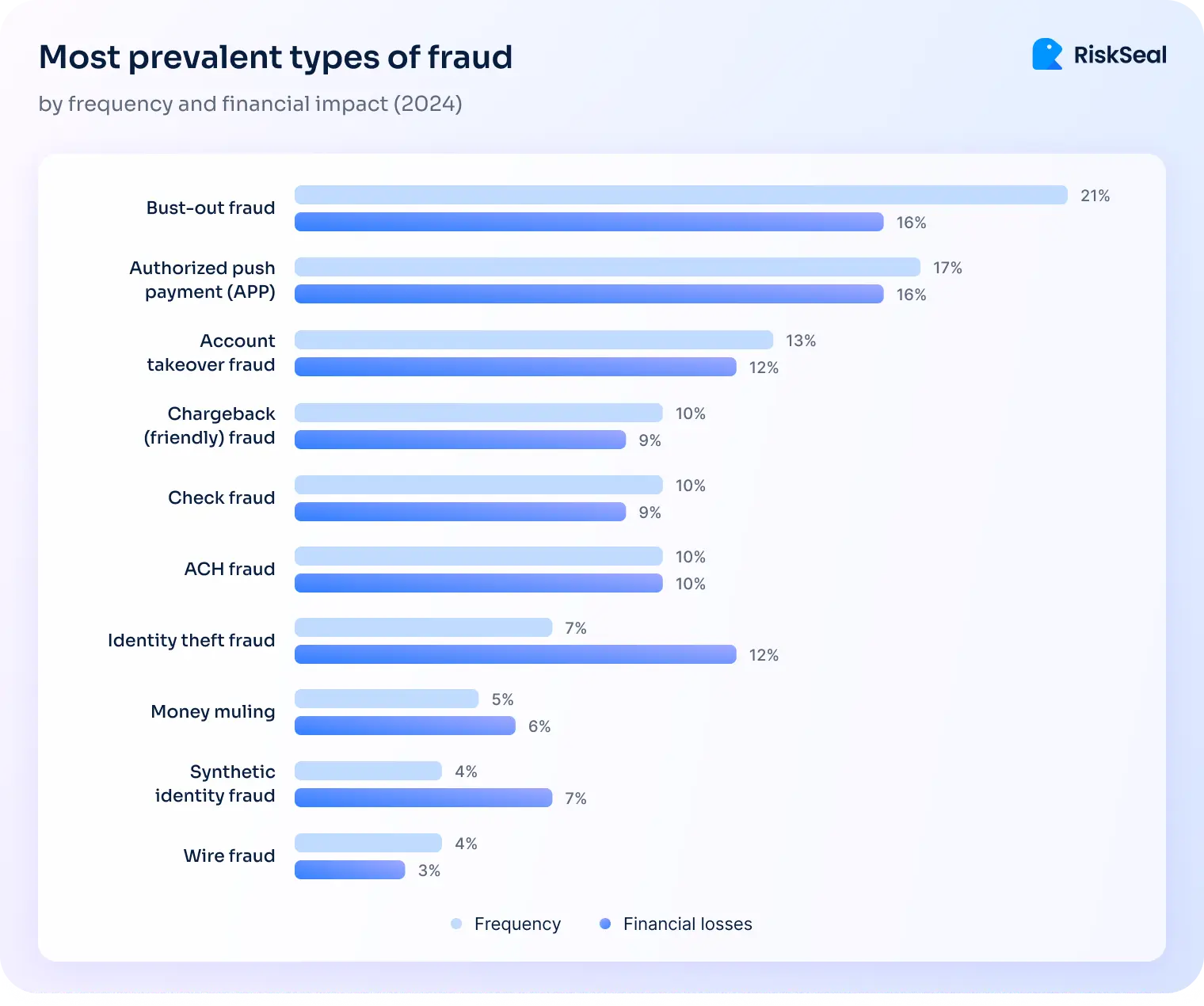
Fraud also complicates predictions. Stolen details, synthetic identities, manipulated documents, and coordinated applications can make applicants appear safer than they are.
Finally, borrower behavior changes over time.
A credit profile created several months ago may miss important recent developments. The same applies to income documents and other static records.
In my experience, this gap matters most in fast digital lending. Decisions happen quickly, while customer circumstances can change just as fast.
Poor risk estimates affect the entire lending operation.
Higher defaults directly increase credit losses. They can also reduce portfolio profitability and increase collection costs.
There is another side to underwriting risk.
Overly cautious models can reject applicants who could repay successfully. That reduces approval rates and limits lenders' ability to grow sustainably.
Effective risk based underwriting therefore requires balance. Risk teams need enough evidence to identify both unsafe and potentially good borrowers.
Traditional credit data remains the foundation of lending.
Credit reports can show existing accounts, outstanding balances, repayment history, collections, and credit inquiries. Lenders then combine this information with other financial data.
This history is highly valuable because repayment behavior predicts future risk.
However, historical credit data has natural limits.
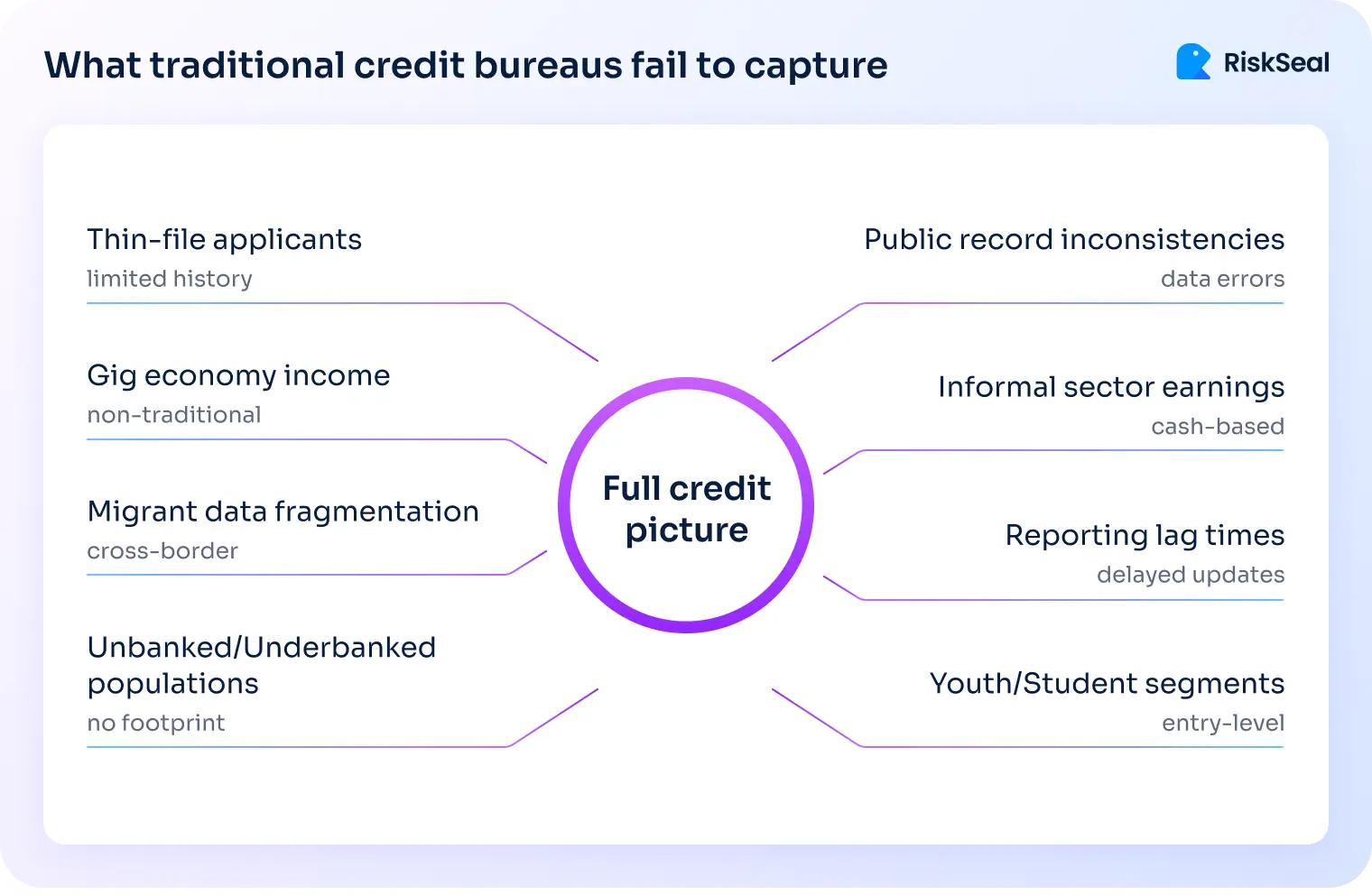
Some applicants have very little borrowing history. Others may have records that are years old and no longer reflect their current circumstances.
That creates demand for alternative data.
Regulators have recognized that alternative data can provide additional information for underwriting. When used appropriately, it may improve decision accuracy and expand access to mainstream credit.
Cash-flow information is one established example.
The CFPB has noted that cash-flow data may help lenders understand how applicants manage current financial obligations alongside their credit history.
Digital footprint widens the perspective financial institutions take when assessing loan applicants. An alternative data provider may analyze identifiers such as:
These identifiers can connect to hundreds of digital signals.
A long-established email can support identity stability. A very recent or disposable address may require further verification.
Phone history can provide additional continuity signals.
Online memberships can add context around spending capacity. Professional or commercial services may support evidence of ongoing economic activity.
Patterns across devices, locations, and online accounts can also reveal inconsistencies.
No single observation should define a borrower.
The value comes from seeing how many independent signals fit together.
The Federal Reserve describes alternative data as a potential way to expand access for consumers with limited credit histories. Recent advances in technology have made these datasets increasingly practical for financial services.

Traditional data will remain essential.
Digital data enrichment helps make risk underwriting more current. It gives lenders another view of who the applicant appears to be today.
Alternative data providers turn large amounts of raw information into structured signals. The exact process differs between providers. A typical workflow contains four main stages.
The process begins with identifiers supplied during an application. These may include an email, phone number, IP, name, location, or username.
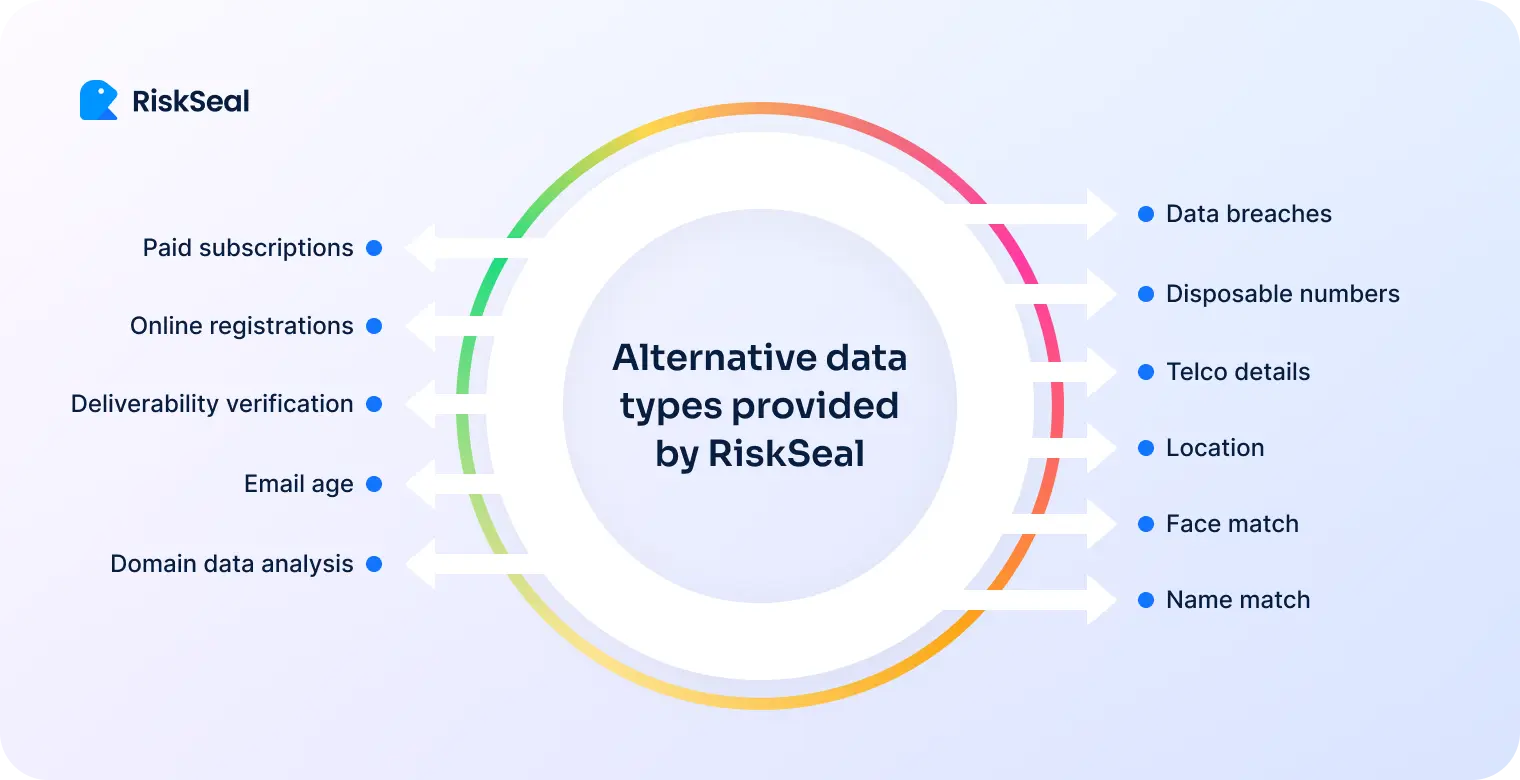
The provider checks relevant digital sources and databases. It can then identify account presence, history, consistency, and other available attributes.
This process can happen through an API during onboarding.
Raw observations have limited value by themselves. The system analyzes relationships between them.
For example, an email may appear well established. The phone may also have a long history and match the same geography.
That combination can support identity continuity.
A different applicant may use a very new email. Their phone may also be recent, while their IP location conflicts with the application.
The combined pattern can justify extra verification.
The analyzed signals then become usable risk features.
Providers may organize them into categories covering identity stability, financial activity, digital maturity, fraud indicators, or behavioral patterns.
Predictive models can also combine these features into a score.
This allows hundreds of observations to become manageable within an existing underwriting workflow.
The lender decides how to use the additional information.
Digital data can enrich an existing scorecard, support manual review, adjust verification requirements, or contribute to a broader credit model.
In risk-based underwriting, different risk profiles can therefore receive different treatment.
A strong application may move through automatically. An uncertain one may require another verification step.
The final lending policy remains with the creditor.
Consider two applicants with similar bureau profiles.
One has a mature digital identity across several long-running services. Their email, phone, location, and online accounts reinforce each other.
The second has several newly created identifiers. Their location and device information also show inconsistencies.
Their credit histories may look similar.
Digital enrichment gives the risk team more context for deciding how much confidence each application deserves.
This type of analysis would be difficult through manual research. Modern infrastructure allows lenders to evaluate large datasets within seconds.
AI and machine learning help identify patterns across many variables.
Models can detect relationships that would be impossible for analysts to evaluate individually.
They can also estimate how strongly particular patterns correlate with repayment or default.
Explainability remains essential.
In the United States, for example, creditors using complex models must still provide specific reasons for adverse credit decisions where required under ECOA and Regulation B.
Alternative data involves both volume and variety.
One applicant can generate signals across communication services, marketplaces, financial platforms, subscriptions, devices, and local online ecosystems.
Big-data infrastructure makes collection and processing possible at underwriting speed.
Historical outcomes connect those signals to real credit performance.
Models can test which combinations appear more frequently among good and bad borrowers.
In my experience, this is where alternative data becomes most useful. A long list of digital facts needs predictive validation before it can support risk decisions.
These technologies can help lenders assess applicants who traditional systems struggle to describe.
That creates opportunities for thin-file borrowers, freelancers, gig workers, younger consumers, and people entering formal credit markets.
The richer you want your models to be, the more responsibility it creates. Here are some of the most common challenges financial organizations face when deploying new data sources.
Alternative variables can introduce or reproduce unfair patterns.
Teams should test models across relevant populations and review how individual variables affect outcomes.
Strong governance matters from model development through production monitoring.
A large dataset does not automatically produce better predictions. Signals can be outdated, incomplete, misclassified, or unavailable in particular markets.
Providers therefore need strong source validation and ongoing model monitoring.
Local coverage also matters. A feature with high predictive value in Mexico may provide little information in another market.
Credit decisions operate under strict legal frameworks.
Requirements vary across countries and depend on how data is collected, processed, and used.
Risk teams need clear data provenance, lawful processing, model governance, and explainable outputs.
This deserves attention early in product design.
Regulators have also stressed that alternative data can create both benefits and consumer-protection risks. A strong compliance program should evaluate those risks before deployment.
Credit underwriting will increasingly combine historical records with real-time context.
The opportunity lies in choosing signals that genuinely improve prediction, then proving their value through testing.
Risk teams should demand strong data quality, explainability, local relevance, and measurable portfolio results.
As digital economies grow, one question will become increasingly important: how much useful information about creditworthiness still sits outside the traditional credit file?

Explore how credit stress testing and real-time alternative data empower lenders to spot early warning signs and protect portfolios during the Christmas season.


Discover the power of alternative data in credit scoring to enhance financial inclusion.
.webp)
Discover how social media profiling enhances credit risk management by analyzing digital footprints.