
Explore how to check a digital footprint and learn what online signals can reveal to lenders during credit risk assessment.
Every time a person signs up for a new app, creates an account, or shops online, there’s a little trace left.
Some traces are obvious, like social media posts. Others are easier to forget, like an old email address or a subscription no longer used.
Together, these bits of information make up a digital footprint. Over time, these traces can tell quite a story – from how long you've been active online to which services you use and more.
That's why checking your digital footprint can be useful for privacy, security, and reputation management. But there's also a less obvious reason: your financial life.
Today, lenders can use digital signals to verify identities, detect fraud, and better understand credit risk.
So, how much of your digital footprint can you actually find yourself? And what can financial institutions see that a simple Google search won't reveal?
You don't have to be a celebrity or a public figure for someone to look you up online.
Your digital footprint may attract attention in surprisingly ordinary situations. A job application, visa request, or loan application can all involve some form of online background research.
And sometimes, the person looking for information about you might be a complete stranger.
When you apply for a job, your future employer may look beyond your CV and LinkedIn profile.
Recruiters sometimes review publicly available social media posts, professional profiles, and other online mentions. They may want to verify your experience or learn more about your professional background.
Old posts and forgotten profiles can still appear in search results. That's why checking what potential employers can find is worth doing before your next interview.
Your online activity may also become relevant during immigration checks, security screenings, or legal investigations.
Depending on the country and procedure, authorities may examine publicly available posts, account details, and other digital records. Some investigations may involve additional information obtained through lawful requests to service providers.
Not every visa application or background check involves this level of scrutiny. The information authorities can access depends on local laws and the circumstances.
If you're a public official, business leader, or influential figure, your online history may become a subject of public interest.
Journalists sometimes review old posts, public profiles, and archived websites when researching a story. These records can help verify statements, establish timelines, or identify inconsistencies.
And the internet has a long memory. Something you posted years ago may resurface when you least expect it.
Not everyone looking into your digital footprint has good intentions.
Sometimes, strangers try to uncover someone's home address, workplace, or personal contact information. Unfortunately, publicly available details can make that easier than many people realize.
Consider an ordinary Instagram photo. A visible street sign, office entrance, or recognizable view from a window may reveal more about your location than you intended.
Checking your own footprint helps you spot these details before someone else does.
It's also a chance to discover forgotten accounts, exposed email addresses, or credentials affected by data breaches.
Your digital footprint can also become relevant when you apply for a loan, credit card, or another financial product.
Lenders may use digital signals to verify your identity, detect potential fraud, and assess credit risk. This information can complement traditional credit reports and other application data.
Unlike a recruiter reviewing public social media, financial institutions may use specialized tools to analyze technical and historical signals associated with your email, phone number, IP address, or device.
Of course, these checks must follow applicable privacy, consent, and financial regulations.
Credit risk teams are not trying to understand someone's online personality.
The useful part is consistency. Digital signals can provide additional context around an application.
Email data is one of the clearest examples. A single address can produce several useful signals without reading anyone's private messages.
Lenders may analyze an email address's approximate age and structure.
They may also check breach history or presence across established services. A newly created or unusual address can become one signal among many.
Email age itself can sometimes be estimated through several indirect methods. We covered those approaches in our guide to estimating the age of an email account.
Phone data adds another layer.
Signals may include number validity, carrier information, VoIP usage, or approximate maturity. Consistency with other application details can also matter.
Established account history provides useful context.
An identifier connected to older services creates a different pattern from one appearing across several platforms very recently. Account quantity alone says little about creditworthiness.
Digital footprint analysis can also include IP and device information.
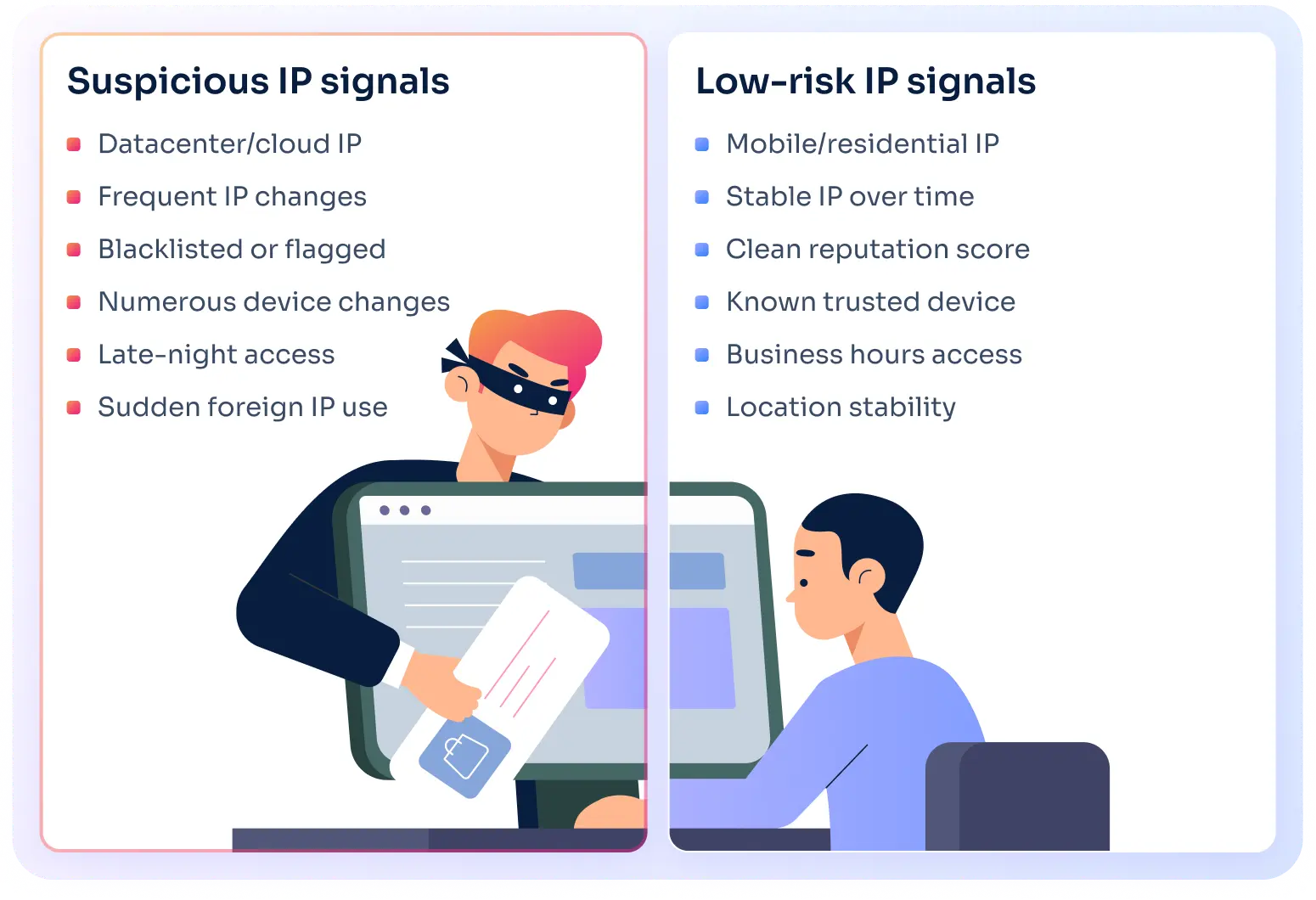
Examples include IP type, VPN or proxy use, device reuse, location consistency, and frequent device switching.
Individual signals need surrounding context.
A VPN, new email, or unusual device alone provides limited information. A combination of several unusual indicators can carry more predictive value.
This is central to responsible digital footprint analysis. Patterns matter more than isolated online behaviors.
No universal digital footprint checker can reveal everything. A useful self-audit combines several methods. Each one covers a different layer of online activity.
A search engine is the easiest starting point.
Useful searches include a full name, current usernames, and previous usernames. An email address can also be searched inside quotation marks.
Adding an employer, city, school, or profession may uncover additional pages. Image search can reveal old profile pictures and reposted content.
This mainly shows the publicly indexed footprint.
Email archives often reveal accounts forgotten years ago.
Search terms such as “welcome,” “verify your email,” “confirm your account,” and “password reset” can help surface registrations.
That may uncover inactive forums, shopping accounts, apps, or subscriptions.
Password managers and browser login lists offer another useful source.
They can show accounts that no longer come to mind. Old credentials may also point to services worth closing or securing.
Public profiles should also be checked directly.
LinkedIn, Reddit, GitHub, X, Facebook, Instagram, and old forums can contain years of searchable information.
Manual checks are especially useful for profile visibility. They show what another person can see publicly without account-level access.
Different tools answer different questions.
A search engine can reveal public pages. An OSINT platform may connect identifiers across services. A breach checker focuses on leaked data.
Google remains one of the simplest tools for reviewing public exposure.
Searching names, usernames, email addresses, and combinations of personal details can reveal indexed profiles and mentions.
Using site: searches can narrow the results. For example, a search can focus specifically on Reddit, LinkedIn, GitHub, or another website.
Epieos provides more specialized OSINT searches.
Its current service includes an email checker covering more than 200 sites. Paid modules also cover services including LinkedIn, GitHub, Facebook, and several fitness or productivity platforms.
Epieos currently requires users to confirm that they act in a professional or business capacity. That makes it better suited to professional research than casual consumer checks.
Have I Been Pwned focuses on breach exposure.
A person can enter an email address and see whether it appears in known data breaches. The service also shows affected breaches and exposed data categories.
This gives a useful security view of the digital footprint. It does not provide a complete list of online accounts or a credit profile.
Unlike the tools above, professional services such as RiskSeal are designed for large-scale, automated digital footprint analysis.
Their clients are organizations such as banks, lenders, and insurance companies.
These businesses use specialized platforms to verify identities, detect fraud, and assess risk during customer onboarding.
Users cannot use RiskSeal to look up their own digital footprint. Instead, its technology processes relevant digital signals when they apply for a financial service, such as a loan.
This processing follows applicable privacy laws and consent requirements.
Rather than accessing private messages or browsing histories, RiskSeal analyzes signals associated with identifiers like an email address and phone number.
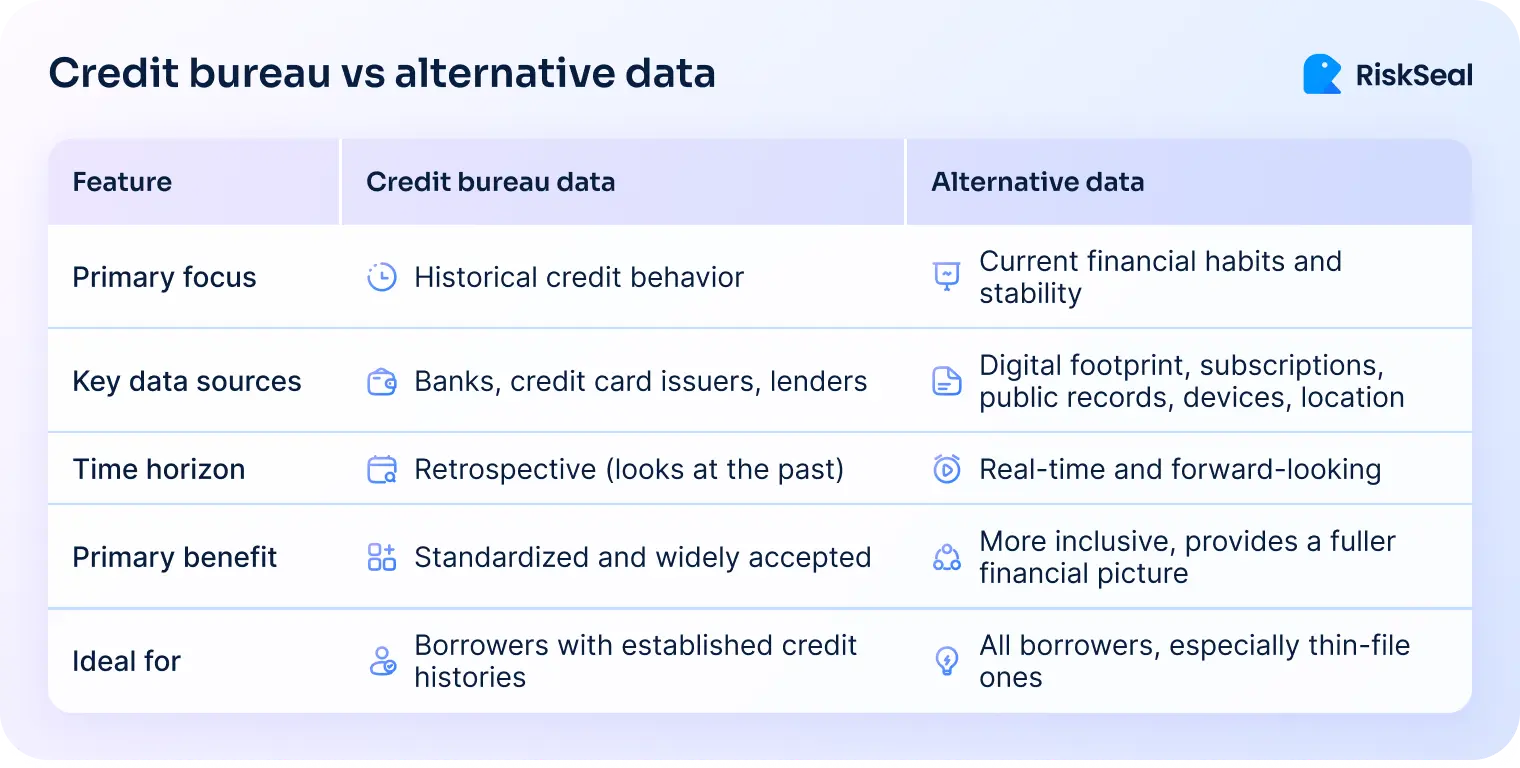
A digital footprint does not directly change a traditional bureau-based credit score.
Scores such as FICO rely on information contained in credit reports. That includes payment history, amounts owed, credit history length, new credit, and credit mix.
However, lenders do not rely on bureau data alone in every case.
Many also use alternative data to add an extra information layer around an applicant. Digital footprint belongs to this broader category of nontraditional data.
That data can support lender-specific underwriting models, fraud checks, verification, or alternative credit scoring.
So, digital signals may influence a lending decision without changing the traditional bureau score itself.
Depending on the model, they may contribute to approval decisions, fraud flags, risk segmentation, or pricing.
This is why the distinction matters. A bureau score can remain unchanged while the lender still considers other signals during assessment.
Regulatory requirements remain important here. Credit providers must account for explainability, fair lending, privacy, permissible use, and local data protection rules.
Some digital patterns can deserve a closer look.
Examples include a very recent email address, virtual phone number, frequent device changes, or inconsistent geographic information.
Identifiers with almost no history may also stand out. The same applies when application details conflict with established digital signals.
Automation patterns can matter too. Very fast form completion or unusual interaction patterns may support fraud detection.
None of these examples should become automatic labels.
A new email can follow a provider change. A VPN may reflect ordinary privacy habits. Limited social media use can simply reflect personal preference.
These signals become when analyzed together. Context helps risk teams separate meaningful patterns from ordinary digital behavior.
A lender cannot manually search Google, Reddit, LinkedIn, and hundreds of platforms for every applicant. Alternative data systems automate that work.
They can use identifiers provided during an application. Those may include email, phone, IP, and device information.
The system can then convert fragmented observations into structured signals. Risk teams can combine those signals with their existing models.
At RiskSeal, I see this difference as especially important.
A personal self-audit asks: “What information about this person exists online?” A credit risk model asks: “Do these signals add useful context to this application?”
That second question requires consistency, explainability, and responsible data use.
Digital footprints matter for privacy, security, reputation, and financial onboarding.
Search engines, breach databases, and OSINT tools each reveal different pieces. No single method provides a complete picture.
For applicants, the goal is understanding and correcting existing digital information.
For lenders, the task is more analytical. Digital signals need responsible interpretation alongside other risk data.
The value of a digital footprint lies in the broader pattern those traces create.
How can a person check their digital footprint?

A useful check combines several methods.
Search engines reveal public pages and mentions. Old inboxes and saved logins uncover forgotten accounts. Breach databases show exposed information, while direct platform searches reveal public profiles and activity.
What are the best methods to check digital footprints on platforms like LinkedIn and Reddit?
For LinkedIn, useful methods include reviewing the public profile while logged out and searching the person's name through search engines.
For Reddit, known usernames can be searched directly. Google queries such as site:reddit.com username can also surface public posts and profiles.
These methods only reveal publicly accessible information.
Can a digital footprint affect a credit score?
Traditional FICO Scores use credit report information rather than general digital footprint data.
Some lenders use alternative digital signals separately. Those signals can support underwriting, fraud checks, verification, or lender-specific risk models.
What information can lenders find in a digital footprint?
Depending on the source and jurisdiction, lenders may access signals around email maturity, phone characteristics, devices, IP addresses, account history, location consistency, and other digital patterns.
Professional systems structure these signals for risk analysis.
Can someone remove their digital footprint completely?
Complete removal is rarely realistic.
A person can delete unused accounts, tighten privacy settings, update incorrect information, and request certain removals. Copies, breach records, archived material, or third-party references may remain.
Is checking someone's digital footprint legal?
The answer depends on the country, purpose, source, and data involved.
Public information can often be viewed freely. Using personal data for employment, lending, or other formal decisions can trigger privacy, consumer protection, fair lending, or reporting requirements.
Is a small digital footprint a bad sign for lenders?
No.
Limited online activity can reflect privacy preferences, age, geography, lifestyle, or limited use of digital services. Risk teams get more value from broader patterns than from the size of a footprint alone.
How can OSINT tools be used to analyze someone's digital footprint?
OSINT tools can connect publicly available identifiers across different sources.
Common starting points include usernames, email addresses, domains, and public profiles. Any apparent match should be verified because identical usernames or names can belong to different people.
For personal checks, these tools are most useful for finding one's own exposed information.
What are the key features of effective OSINT digital footprint analysis tools?
Useful tools need strong source coverage, current data, clear provenance, and low false-positive rates.
They should also make individual findings easy to verify. For professional use, privacy controls, lawful data handling, auditability, and clear explanations become equally important.
.webp)
Dive into why traditional credit scoring fails neobanks and explore smarter, data-driven solutions for assessing credit risk.


Explore how SHAP, LIME, ALE, and PFI help lenders explain individual credit decisions and evaluate model behavior.

Discover how alternative credit scoring differs from traditional and aids in identifying reliable clients without credit histories.