Explore RiskSeal's FINNOSUMMIT 2026 takeaways on AI in lending, alternative data, and the future of financial innovation in Mexico.
On September 23-24, RiskSeal joined FINNOSUMMIT 2026 in Mexico City.
Two days of discussions highlighted where financial innovation is moving. Several themes stood out – from AI adoption to more accurate yet inclusive credit decisions.
Here's what we learned and how RiskSeal contributed to the conversation.

FINNOSUMMIT celebrated its tenth edition at Expo Santa Fe this September.
Over the years, the summit has become a meeting point for Latin America's financial ecosystem. It brings together banks, fintechs, investors, technology providers, and industry leaders.
This year's theme was "Where Industries Converge to Meet Finance."
In 2026, financial technology increasingly supports businesses outside traditional banking. Retailers, manufacturers, and other industries are integrating payments, lending, and financial management into their operations.
Mexico offers a particularly interesting environment for this transition. According to Finnovista's 2026 Fintech Radar, the country has 795 fintech startups. Around 80% collaborate with banks or are exploring partnerships.
These relationships suggest a maturing ecosystem with growing opportunities for cooperation.
The anniversary edition brought these developments into focus. Discussions explored how financial institutions can turn technological progress into practical business results.
Artificial intelligence was among the summit's most prominent topics. According to an analysis by Luis Aguilar of Shimli, 22 of 67 sessions included AI in their titles.
The conversations covered lending, collections, identity verification, customer service, and operational automation.
However, much of the discussion focused on implementing these solutions responsibly.
Financial institutions already recognize AI's potential. Their challenge involves making it reliable, measurable, and compliant – in practice, not just in their speeches.
Representatives from Banco Plata, Actinver, and ElevenLabs discussed these implementation challenges.
AI can support loan origination, fraud detection, and collections. Yet deployment requires effective data governance and controlled testing. Banks must also work within strict regulatory and infrastructure requirements.
Another recurring question concerned the role of human judgment.
Speakers from Coppel, Klar, and Incode discussed balancing automation with appropriate human involvement. Excessive verification can create friction for legitimate customers. Meanwhile, insufficient oversight can introduce operational and security risks.

These trade-offs are especially relevant to credit providers.
Risk teams must balance fraud prevention, approval rates, and customer experience. They also face considerable regulatory pressure and accountability.
The challenge is deciding where additional information and verification create genuine value.
For me, this was one of the summit's most fascinating discussions. Effective automation depends on understanding the context behind each decision.
Several discussions approached this question from different perspectives.
In collections, representatives from Klar and Twilio explored personalized customer communication.
A missed payment can have several explanations. Customers might forget a deadline or misunderstand repayment terms. Understanding those circumstances helps lenders choose more appropriate responses.
Similar considerations apply to fraud prevention and credit assessment.
Individual signals rarely provide enough information for reliable decisions. Their predictive value depends on surrounding evidence and broader patterns.
This creates opportunities for technologies that bring different information sources together. The objective is to support existing risk processes with additional context.
Another important theme was cooperation between established financial institutions and technology providers.
Representatives from BBVA, Santander, and Sabadell discussed innovation within banking environments.
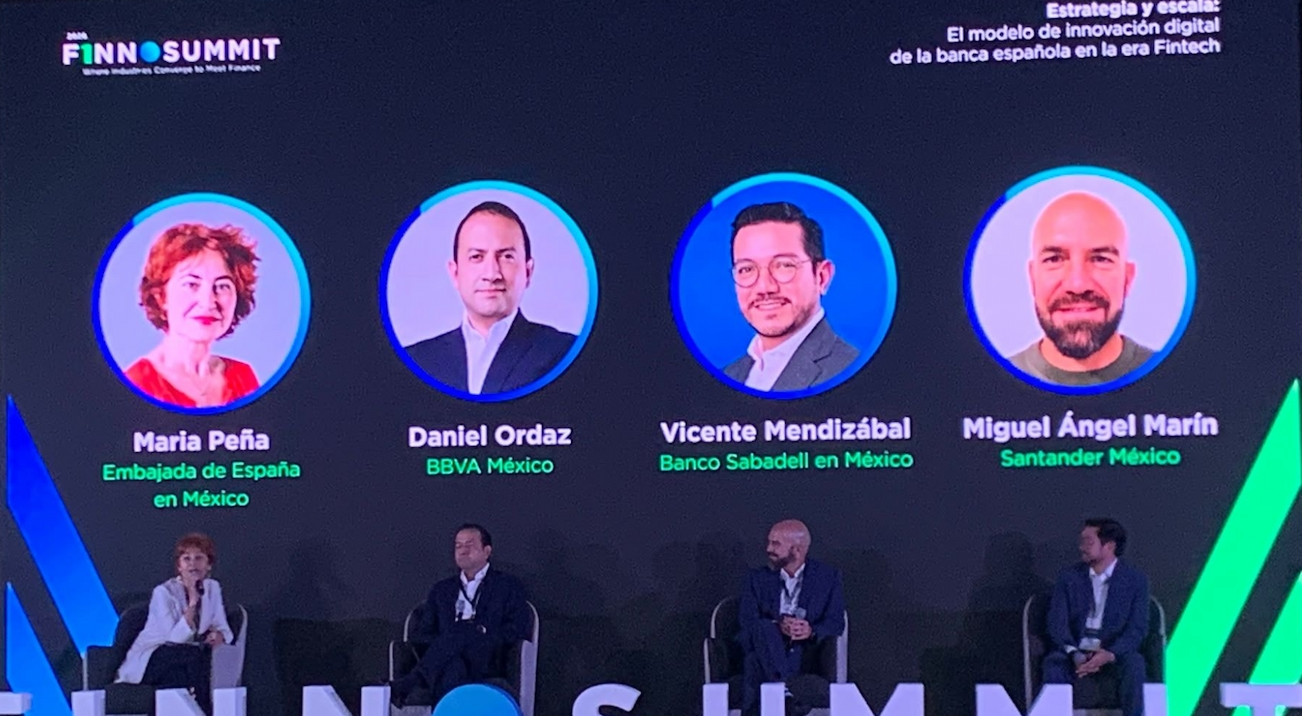
Integrating new technology takes more than finding a promising solution. Banks must consider security, infrastructure, employee readiness, and regulatory requirements. This makes partnerships with specialized providers increasingly relevant.
The FINNOSUMMIT Challenge illustrated how focused solutions can address practical problems.
KredFeed presented working capital financing for manufacturing SMEs. Trébol focused on automating banking document processing, while Zumma addressed financial operations.
These examples reflected the summit's broader focus on the real economy.
Payments also featured prominently in discussions about financial infrastructure. Wise Platform highlighted security, transparency, and interoperability across payment networks.

Other presentations explored embedded finance and the growing connection between financial services and customer loyalty.
Together, these developments suggest several directions for Mexico's fintech market.
AI adoption will likely face stronger demands for measurable results. Financial institutions will need solutions that improve existing processes without introducing unnecessary complexity.
Data quality and interoperability will also become increasingly important. Better-connected information can support more consistent decisions across the customer journey.
Finally, specialized technology partnerships should continue expanding.
For providers, demonstrating clear value through practical testing will remain essential.
These trends are closely aligned with RiskSeal's participation at FINNOSUMMIT.
Our team joined the event as a sponsor. We connected with participants at Meeting Point and presented on the Demo & Startup Stage.
Our presentation asked a provocative question: "Would you decline a loan because someone has a gambling account?"
The question reflects a challenge facing modern credit risk assessment.
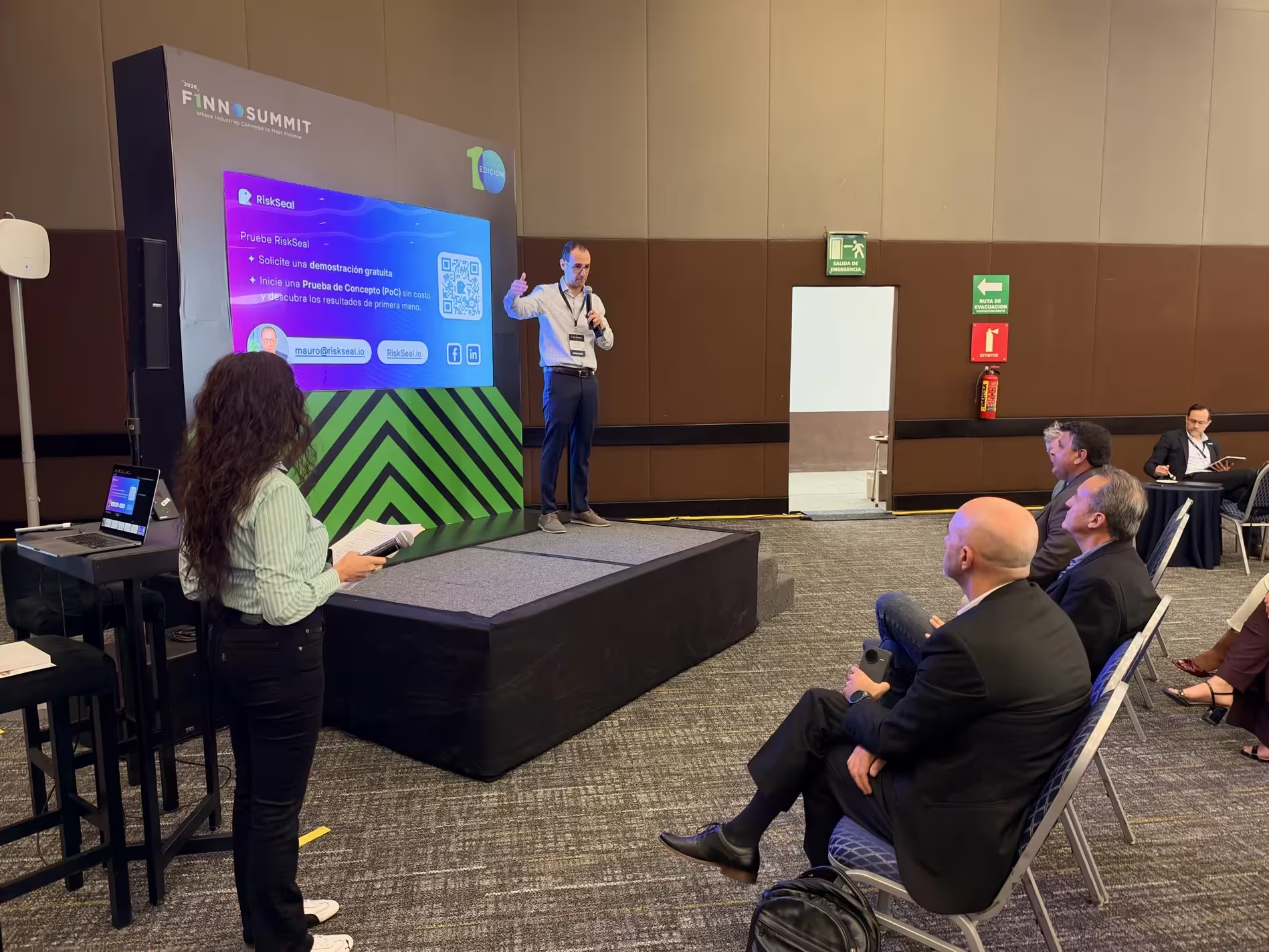
A single digital signal can appear concerning without sufficient context. However, its meaning may change when considered alongside other information.
Consider an applicant with an established digital identity and consistent account history.
Now consider another applicant with multiple recently created accounts and unusual identity changes.
Both may show the same gambling-related signal. Yet their broader profiles can reveal different risk patterns.
That is where digital footprint analysis becomes particularly useful.
RiskSeal analyzes signals associated with email, phone, IP, and online accounts. Our catalog includes more than 450 signals across global and local platforms.
Available signals vary by applicant, market, and data coverage.
The resulting information helps lenders assess digital identity consistency and behavior. It can complement bureau information and existing credit risk models.
During our presentation, we explored this approach using Mexico-relevant digital signals.
The discussion connected directly with FINNOSUMMIT's wider agenda: stronger decisions through better information.
For lenders serving thin-file applicants, that additional context can be valuable. It creates opportunities to improve risk separation while supporting responsible credit access.
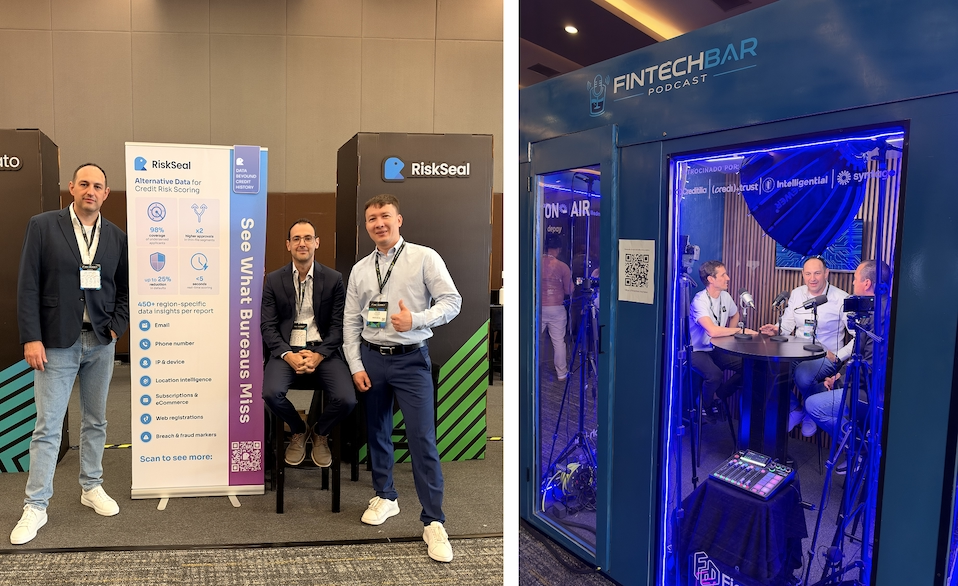
FINNOSUMMIT offered a valuable opportunity to engage with Mexico's fintech community.
The discussions showed how closely financial innovation connects with everyday operational challenges.
AI, alternative data, and partnerships are creating opportunities across the lending journey. Their success will depend on measurable outcomes and responsible implementation.
We were glad to contribute to RiskSeal's perspective on digital credit scoring.
We thank the organizers and everyone who joined the conversations. We look forward to continuing our work with the region's financial innovators.
Follow RiskSeal on LinkedIn and Facebook for fintech insights, upcoming events, and behind-the-scenes stories about digital credit scoring.

Discover how reverse phone lookup boosts credit risk scoring—verify identity, detect fraud, and assess solvency with just a phone number.


Learn why ISO/IEC 27001:2022 certification matters for financial companies and explore the steps RiskSeal took to achieve it.
Discover and debunk six common misconceptions about AI in credit scoring and see how RiskSeal helps modern lenders leverage AI safely and effectively.